| View previous topic :: View next topic |
| Author |
Message |
Henry Fisher

Joined: 11 Oct 2008
Posts: 20
Location: USA
|
 Posted: Sun Feb 07, 2010 7:03 pm Post subject: Multicoated, Single Coated, Uncoated -- And dSLRs |
|
Posted: Sun Feb 07, 2010 7:03 pm Post subject: Multicoated, Single Coated, Uncoated -- And dSLRs |
|
|
Henry Fisher wrote:
Hello Forum.
I would like to open a discussion about the use of older optics in front of modern digital sensors. The reason is that I am reading conflicting information in this respect, and I would like it sorted out by the Membership here who may have experience in this respect.
More than a few have said that digital sensors are reflective, and as such, they require optics that have improved anti-reflective coatings. Some have said that superior coatings designed to address this issue are a key ingredient it what it is that constitutes so called "digital lenses."
Recently, I read a thread on nikonians.org wherein a gentleman said that he did not recommend Nikon's series E lenses for digital sensors because they were only "single coated."
Are you using older lenses with single coatings or with no coatings with your dSLR? Are you pleased with their technical performance? Do you have problems with flare or internal reflections which are leading you towards upgrading to only "digital" lenses?
I am particularly interested inasmuch as I intend to us a lot of old Nikon and other F mount manual focusing glass on a D700. So far, I am not seeing the problem. One of my lenses is a 50mm f1.8 Series E, of the sort that the nikonians.org gent "does not recommend." It seems to have no problem whatsoever, as far as I can tell. What am I missing in this analysis? The pictures look good to me.
Are there special limitations or precautions one should consider when one is using old glass on new digi bodies?
Thanks for reading this, and for the courtesy of your response.
Happy day.

_________________
Henry
A certified dinosaur using F, F2, D700, M3, Kiev 4a
"I think there's some sense of magic in the fact that what's out there can be caught in this little box." ~ John Loengard
Last edited by Henry Fisher on Mon Feb 08, 2010 6:29 pm; edited 1 time in total |
|
| Back to top |
|
 |
Spotmatic


Joined: 18 Aug 2008
Posts: 4045
Location: Netherlands
|
Posted: Sun Feb 07, 2010 7:26 pm Post subject: |
|
Posted: Sun Feb 07, 2010 7:26 pm Post subject: |
|
|
Spotmatic wrote:
I can only tell about my own experiences, and I have used several lenses from 1896 up to today. Most of my lenses are single-coated and some of them not even coated, and I'm not seeing any problems either. Of course, most of my uncoated prewar lenses are low contrast because of light shattering in the lens, but nothing that can't be corrected in PP.
A good modern example is my Sigma 500mm f/4.5 APO EX. Apparently there's an updated version available with "DG" in its name because it has a "special" digital coating. Well, my shots with the non-DG lens are nothing short of superb, so I don't feel the urge to upgrade just for a "better" coating.
Mind you: I don't say that the problem does not exist, just that I don't see it. Let's reserve this discussion for people who never take photographs, but only talk about it 
_________________
Peter - Moderator
Pentax K-5 + Pentax 645 + Canon 5D + Bessa RF 10,5cm Heliar, and a 'little' bag full of MF lenses. The lens list is * here *.
My fast 80s: Asahi-Kogaku Takumar 83mm f/1.9 - Super-Takumar 85mm f/1.9 - FA 77mm f/1.8 Limited - Cyclop 85/1.5 (Helios-40 innards) - Komura 80mm f/1.8 - Meyer Görlitz Primoplan 7,5cm 1:1.9 - Carl Zeiss Jena 80mm f/1.8 Pancolar - Canon 85mm f/1.8 S.S.C. - Canon 85mm f/1.2 S.S.C. Aspherical |
|
| Back to top |
|
|
cooltouch

Joined: 15 Jan 2009
Posts: 9096
Location: Houston, Texas
|
Posted: Sun Feb 07, 2010 7:40 pm Post subject: |
|
Posted: Sun Feb 07, 2010 7:40 pm Post subject: |
|
|
cooltouch wrote:
Well, bearing in mind that I'm commenting based on my own experiences, and to some extent on what I've read, here's my take on things:
Yes, "digital lenses" have coatings as well as internal baffling in some cases designed to deal with the stray reflections that can degrade the image. But I suspect that rear element shape also is mixed into the equation.
For instance, it has been pretty well documented that the Tamron SP 90mm f/2.5 Macro (models 52B and 52BB) causes a hot spot to appear in the center of the image with many DSLRs. I have confirmed this with my own Tamron 52B and my Canon XS. But in the case of my lens and camera, this hot spot is a rather minor one, only beginning to show once I've stopped the lens down to about f/8 or so. So, as long as I shoot with the lens fairly wide open, I'm okay.
Now the reason that has been cited for this problem with the Tamron is it has a flat rear element, which is the culprit.
I also have used quite extensively a mid-1960s vintage 55mm f/3.5 Micro-Nikkor lens with my XS. This lens is not multicoated, but I have not had a bit of problem with reflections degrading the images at all.
I also own a Century Precision Optics 500mm f/5.6 telephoto lens that also dates back to the 1960s, which I've used quite a bit with my Canon XS. It isn't multicoated, either. The pair take amazingly sharp photos. No image degradation whatsoever.
In the case of the Micro-Nikkor and the CPO 500/5.6, both have recessed front elements -- the Micro because of its lens design, and the CPO because of its integral hood. The fact that the front elements are hooded probably allows for some improved contrast, but they will have no effect in lighting conditions where the sun is not directly visible.
Bottom line, I would not pay too much attention to the opinions of others. Too many folks take it upon themselves to present "expert" opinions based only on their assumptions and not real data.
Here at mflenses, you'll have the opportunity to inquire about lenses that people have used with their DSLRs, and who can provide you with real-world data. Which is why this forum is so useful.
So, if you are enjoying good results with a lens, like your 50mm Series E, then it, by definition, works well with your setup. And you have just passed along this useful bit of information to the rest of us here. Backing up your observations with photographs is always helpful and welcome as well.
_________________
Michael
My Gear List: http://michaelmcbroom.com/photo/gear.html
My Gallery: http://michaelmcbroom.com/gallery3/index.php/
My Flickr Page: https://www.flickr.com/photos/11308754@N08/albums
My Music: https://soundcloud.com/michaelmcbroom/albums
My Blog: http://michaelmcbroom.com/blogistan/ |
|
| Back to top |
|
|
F16SUNSHINE

Joined: 20 Aug 2007
Posts: 5486
Location: Left Coast
Expire: 2011-11-18
|
Posted: Mon Feb 08, 2010 1:41 am Post subject: |
|
Posted: Mon Feb 08, 2010 1:41 am Post subject: |
|
|
F16SUNSHINE wrote:
Multi coating will always give the best results in terms of Contrast, Saturation, and Color.
But what if you want low contrast or saturation. Or colors on the muted side for that matter.
Getting to know what to expect from different lenses will help improve any photogs ability to "make" the image that you want.
Try a some and see for yourself. There is really no best if it's not what you need for the situation.
I often will use a single coated lens when shooting B+W film as it seems to improve shadow detail. These is the case even though I have lenses with the very "best" modern coatings.
BTW A hood on a lens will always improve results performance more than late stage coatings.
_________________
Moderator |
|
| Back to top |
|
|
Henry Fisher
Joined: 11 Oct 2008
Posts: 20
Location: USA
|
Posted: Mon Feb 08, 2010 8:20 am Post subject: |
|
Posted: Mon Feb 08, 2010 8:20 am Post subject: |
|
|
Henry Fisher wrote:
.
Thanks, Guys, for those thoughtful responses.
As noted, there are doubtlessly some self-appointed experts who are not really close to the problem, but who may be mouthing bits and pieces of things they have read somewhere, or some such. I agree that it is a much better idea to test individual lenses, and let this forum serve as a clearing house for information about what actually works and what does not.
The MF lenses I will be checking out are as follows:
Nikkors 24f2.8, 28f3.5, 35f2.8, 35~105f3.5, 43~86f3.5, 50f1.4, 50f1.8, 105f2.5, 135f3.5, 200f4, 500f8r, and a Kiron 80~200f4.
I found the idea about the flat rear element to be an interesting one. I will be looking for a correlation between that and the sensor, if I have any such lenses.
It is refreshing to find such seasoned and expert help as is available here. Needless to say, I am honored to be in your company.
Happy day.
_________________
Henry
A certified dinosaur using F, F2, D700, M3, Kiev 4a
"I think there's some sense of magic in the fact that what's out there can be caught in this little box." ~ John Loengard |
|
| Back to top |
|
|
aoleg


Joined: 22 Feb 2008
Posts: 1387
Location: Berlin, DE
|
Posted: Mon Feb 08, 2010 9:27 am Post subject: |
|
Posted: Mon Feb 08, 2010 9:27 am Post subject: |
|
|
aoleg wrote:
The issue of single vs. multicoating has been debated before. MC sure helps boost contrast and saturation, but it is not the only factor, and not even the most important one.
First, there's lens design. The more air/glass surfaces a lens has, the more important is multicoating. Old designs such as Sonnar were made to minimize the number of air/glass surfaces by combining elements into groups. Nikkor-Q, Nikkor-Q.C., and the 'K' version of 135/3.5 were Sonnar designs with 4 lens elements in 3 groups. As such, coatings did not affect contrast much. Similarly, Sonnar-based Nikkor-P 105/2.5 (silver-nose) is 5 lenses in 3 groups; it gives excellent contrast even in the shadow.
Second, it's blackening of lens edges and baffling/matting of internal surfaces. Unfortunately, many lenses, especially in the USSR and Russia, were built without due care in this respect. I have a fully multi-coated Jupiter-9 that has LOWER contrast than a single-coated version made 30 years before it. This is because this lens was mass-produced and assembled without properly blackening edges of lens elements; disassembling the lens completely and painting each lens edge with matte black paint improves contrast dramatically. Similar problems were noted with many other Soviet and Russian lenses, especially telephoto ones (wide-angles are surprisingly flare-resistant even in single-coated variants, e.g. Mir-10A).
Finally, it's cutting stray light from the back of the lens. Stray light can reflect inside the camera tunnel, causing loss of contrast and over/underexposure.
| Henry Fisher wrote: |
The MF lenses I will be checking out are as follows:
Nikkors 24f2.8, 28f3.5, 35f2.8, 35~105f3.5, 43~86f3.5, 50f1.4, 50f1.8, 105f2.5, 135f3.5, 200f4, 500f8r, and a Kiron 80~200f4.
|
The 24/2.8 and 28/3.5 are great lenses, yet I highly recommend getting muli-coated versions. For wides, MC really matters as hoods are largely ineffective. 35/2.8 is reportedly so-so; I've got the 2.0 version instead, and it's quite good.
I would not bother with early versions of 43-86 (I am selling one, as well as Nikkor-Q 135/3.5; PM if you're interested). Early pre-Ai 43-86's were rather mediocre in performance (yet, IMO, still better than some 18-55 kit lenses ) Ai and later versions are reportedly OK.
Both 50mm are great, the 1.4 is the better one of the two.
105/2.5 is classic design, available in Sonnar-type (pre-Ai, white nose, only available single-coated; very nice), and later Xenotar-type (available MC, which I'd get just to have the best pictures possible).
135/3.5 were also available single and multi-coated (Sonnar type), and MC only (Ernostar type). Depends on what you need...
200/4 were really much improves in Ai and Ai-S compared to pre-Ai, so getting a MC version is the only reasonable option.
_________________
List of lenses |
|
| Back to top |
|
|
Orio

Joined: 24 Feb 2007
Posts: 29545
Location: West Emilia
Expire: 2012-12-04
|
Posted: Mon Feb 08, 2010 10:10 am Post subject: |
|
Posted: Mon Feb 08, 2010 10:10 am Post subject: |
|
|
Orio wrote:
It's not only a matter of multi against single.
The multicoating on my Canon EF80mm 1.8 sucks, and in some positions, the lens flares abundantly, even with a lens hood on.
The single coatings on some of my old lenses are better than the multi of the Canon EF80mm 1.8
_________________
Orio, Administrator
T*
NE CEDE MALIS AUDENTIOR ITO
Ferrania film is reborn! http://www.filmferrania.it/
Support the Ornano film chemicals company and help them survive!
http://forum.mflenses.com/ornano-chemical-products-t55525.html |
|
| Back to top |
|
|
no-X

Joined: 19 Jul 2008
Posts: 2495
Location: Budejky, Czech Republic
|
Posted: Mon Feb 08, 2010 12:18 pm Post subject: |
|
Posted: Mon Feb 08, 2010 12:18 pm Post subject: |
|
|
no-X wrote:
I have no proof of that, but I think, that in past the optical designs were created with respect to prevent flaring - the old designers tried to avoid specific shapes of neighbouring air-glass surfaces, which could cause strong flares. Now lenses are designed by computer programs with MTF curves as priority...
_________________
(almost) complete list of Helios lenses |
|
| Back to top |
|
|
visualopsins

Joined: 05 Mar 2009
Posts: 11662
Location: California
Expire: 2027-07-11
|
Posted: Mon Feb 08, 2010 3:00 pm Post subject: |
|
Posted: Mon Feb 08, 2010 3:00 pm Post subject: |
|
|
visualopsins wrote:
| no-X wrote: |
| I have no proof of that, but I think, that in past the optical designs were created with respect to prevent flaring - the old designers tried to avoid specific shapes of neighbouring air-glass surfaces, which could cause strong flares. Now lenses are designed by computer programs with MTF curves as priority... |
sounds very reasonable to me!
_________________
☮☮☮☮☮☮☮☮☮☮☮☮☮☮☮☮☮☮☮☮☮☮☮☮☮☮☮☮☮☮☮☮ like attracts like! ☮☮☮☮☮☮☮☮☮☮☮☮☮☮☮☮☮☮☮☮☮☮☮☮☮☮☮☮☮☮☮☮
Cameras: Sony ILCE-7RM2, Spotmatics II, F, and ESII, Nikon P4
Lenses:
M42 Asahi Optical Co., Takumar 1:4 f=35mm, 1:2 f=58mm (Sonnar), 1:2.4 f=58mm (Heliar), 1:2.2 f=55mm (Gaussian), 1:2.8 f=105mm (Model I), 1:2.8/105 (Model II), 1:5.6/200, Tele-Takumar 1:5.6/200, 1:6.3/300, Macro-Takumar 1:4/50, Auto-Takumar 1:2.3 f=35, 1:1.8 f=55mm, 1:2.2 f=55mm, Super-TAKUMAR 1:3.5/28 (fat), 1:2/35 (Fat), 1:1.4/50 (8-element), Super-Multi-Coated Fisheye-TAKUMAR 1:4/17, Super-Multi-Coated TAKUMAR 1:4.5/20, 1:3.5/24, 1:3.5/28, 1:2/35, 1:3.5/35, 1:1.8/85, 1:1.9/85 1:2.8/105, 1:3.5/135, 1:2.5/135 (II), 1:4/150, 1:4/200, 1:4/300, 1:4.5/500, Super-Multi-Coated Macro-TAKUMAR 1:4/50, 1:4/100, Super-Multi-Coated Bellows-TAKUMAR 1:4/100, SMC TAKUMAR 1:1.4/50, 1:1.8/55
M42 Carl Zeiss Jena Flektogon 2.4/35
Contax Carl Zeiss Vario-Sonnar T* 28-70mm F3.5-4.5
Pentax K-mount SMC PENTAX-A ZOOM 1:3.5 35~105mm, SMC PENTAX ZOOM 1:4 45~125mm
Nikon Micro-NIKKOR-P-C Auto 1:3.5 f=55mm, NIKKOR-P Auto 105mm f/2.5 Pre-AI (Sonnar), Micro-NIKKOR 105mm 1:4 AI, NIKKOR AI-S 35-135mm f/3,5-4,5
Solinon 1:5.6/18 ASPH.
Tamron SP 17mm f/3.5 (51B), Tamron SP 17mm f/3.5 (151B), SP 500mm f/8 (55BB), SP 70-210mm f/3.5 (19AH)
Vivitar 100mm 1:2.8 MC 1:1 Macro Telephoto (Kiron)
|
|
| Back to top |
|
|
Orio
Joined: 24 Feb 2007
Posts: 29545
Location: West Emilia
Expire: 2012-12-04
|
Posted: Mon Feb 08, 2010 3:01 pm Post subject: |
|
Posted: Mon Feb 08, 2010 3:01 pm Post subject: |
|
|
Orio wrote:
| no-X wrote: |
| I have no proof of that, but I think, that in past the optical designs were created with respect to prevent flaring - the old designers tried to avoid specific shapes of neighbouring air-glass surfaces, which could cause strong flares. Now lenses are designed by computer programs with MTF curves as priority... |
Flare is directly visible in the MTF. It lowers the macro contrast which is represented by the 10 lp/mm curve.
_________________
Orio, Administrator
T*
NE CEDE MALIS AUDENTIOR ITO
Ferrania film is reborn! http://www.filmferrania.it/
Support the Ornano film chemicals company and help them survive!
http://forum.mflenses.com/ornano-chemical-products-t55525.html |
|
| Back to top |
|
|
kds315*

Joined: 12 Mar 2008
Posts: 16905
Location: Kehl, Germany
Expire: 2021-03-09
|
Posted: Mon Feb 08, 2010 4:57 pm Post subject: |
|
Posted: Mon Feb 08, 2010 4:57 pm Post subject: |
|
|
kds315* wrote:
| Orio wrote: |
| no-X wrote: |
| I have no proof of that, but I think, that in past the optical designs were created with respect to prevent flaring - the old designers tried to avoid specific shapes of neighbouring air-glass surfaces, which could cause strong flares. Now lenses are designed by computer programs with MTF curves as priority... |
Flare is directly visible in the MTF. It lowers the macro contrast which is represented by the 10 lp/mm curve. |
Only if you take real measurements as a basis! Most MTF curves shown are are simulated ones and the result of raytracing programs which do NOT consider flaring.
@peter (spotmatic): I fully agree. I have many lenses and some are so harsh and so steep in their gamma (sorry, "film speak"), that they produce burnt highlights and blacks without structure. A somewhat softer lens in that case would have allowed a camera sensor to perform better, which sometimes single coating does. Isn't it interesting that COSINA not too long ago offered lenses with multicoating and as a special order single coating? Not just coincidental I would guess...
_________________
Klaus - Admin
"S'il vient a point, me souviendra" [Thomas Bohier (1460-1523)]
http://www.macrolenses.de for macro and special lens info
http://www.pbase.com/kds315/uv_photos for UV Images and lens/filter info
https://www.flickr.com/photos/kds315/albums my albums using various lenses
http://photographyoftheinvisibleworld.blogspot.com/ my UV BLOG
http://www.travelmeetsfood.com/blog Food + Travel BLOG
https://galeriafotografia.com Architecture + Drone photography
Currently most FAV lens(es):
X80QF f3.2/80mm
Hypergon f11/26mm
ELCAN UV f5.6/52mm
Zeiss UV-Planar f4/60mm
Zeiss UV-Planar f2/62mm
Lomo Уфар-12 f2.5/41mm
Lomo Зуфар-2 f4.0/350mm
Lomo ZIKAR-1A f1.2/100mm
Nikon UV Nikkor f4.5/105mm
Zeiss UV-Sonnar f4.3/105mm
CERCO UV-VIS-NIR f1.8/45mm
CERCO UV-VIS-NIR f4.1/94mm
CERCO UV-VIS-NIR f2.8/100mm
Steinheil Quarzobjektiv f1.8/50mm
Pentax Quartz Takumar f3.5/85mm
Carl Zeiss Jena UV-Objektiv f4/60mm
NYE OPTICAL Lyman-Alpha II f1.1/90mm
NYE OPTICAL Lyman-Alpha I f2.8/200mm
COASTAL OPTICS f4/60mm UV-VIS-IR Apo
COASTAL OPTICS f4.5/105mm UV-Micro-Apo
Pentax Ultra-Achromatic Takumar f4.5/85mm
Pentax Ultra-Achromatic Takumar f5.6/300mm
Rodenstock UV-Rodagon f5.6/60mm + 105mm + 150mm
Last edited by kds315* on Mon Feb 08, 2010 7:13 pm; edited 1 time in total |
|
| Back to top |
|
|
Orio
Joined: 24 Feb 2007
Posts: 29545
Location: West Emilia
Expire: 2012-12-04
|
Posted: Mon Feb 08, 2010 6:12 pm Post subject: |
|
Posted: Mon Feb 08, 2010 6:12 pm Post subject: |
|
|
Orio wrote:
| kds315* wrote: |
| Orio wrote: |
Flare is directly visible in the MTF. It lowers the macro contrast which is represented by the 10 lp/mm curve. |
Only if you take real measurements as a basis! Most MTF curves shown are are simulated ones and the result of raytracing programs which do NOT consider flaring. |
Yes, you're right. Useful punctualization.
_________________
Orio, Administrator
T*
NE CEDE MALIS AUDENTIOR ITO
Ferrania film is reborn! http://www.filmferrania.it/
Support the Ornano film chemicals company and help them survive!
http://forum.mflenses.com/ornano-chemical-products-t55525.html |
|
| Back to top |
|
|
visualopsins
Joined: 05 Mar 2009
Posts: 11662
Location: California
Expire: 2027-07-11
|
Posted: Mon Feb 08, 2010 7:11 pm Post subject: |
|
Posted: Mon Feb 08, 2010 7:11 pm Post subject: |
|
|
visualopsins wrote:
to clarify Sigma "DG" designation:
"DG Lens
The most suitable lenses for 35mm film single-lens reflex cameras, as well as for digital SLR cameras. Sigma's development of the DG (Digital) range of lenses has concentrated on the correction of distortion and aberrations. Magnification of chromatic aberration is particularly conspicuous with digital cameras. The optical designs and cutting-edge technology incorporated by Sigma eliminate flare and ghosting from te image sensor and create excellent color balance. Vignetting is minimized whilst marginal illumination is ensured. These high performance lenses are equally suited for digital and analogue cameras."
ref: http://www.sigmaphoto.com/lenses/lenses.asp (scroll down)
_________________
☮☮☮☮☮☮☮☮☮☮☮☮☮☮☮☮☮☮☮☮☮☮☮☮☮☮☮☮☮☮☮☮ like attracts like! ☮☮☮☮☮☮☮☮☮☮☮☮☮☮☮☮☮☮☮☮☮☮☮☮☮☮☮☮☮☮☮☮
Cameras: Sony ILCE-7RM2, Spotmatics II, F, and ESII, Nikon P4
Lenses:
M42 Asahi Optical Co., Takumar 1:4 f=35mm, 1:2 f=58mm (Sonnar), 1:2.4 f=58mm (Heliar), 1:2.2 f=55mm (Gaussian), 1:2.8 f=105mm (Model I), 1:2.8/105 (Model II), 1:5.6/200, Tele-Takumar 1:5.6/200, 1:6.3/300, Macro-Takumar 1:4/50, Auto-Takumar 1:2.3 f=35, 1:1.8 f=55mm, 1:2.2 f=55mm, Super-TAKUMAR 1:3.5/28 (fat), 1:2/35 (Fat), 1:1.4/50 (8-element), Super-Multi-Coated Fisheye-TAKUMAR 1:4/17, Super-Multi-Coated TAKUMAR 1:4.5/20, 1:3.5/24, 1:3.5/28, 1:2/35, 1:3.5/35, 1:1.8/85, 1:1.9/85 1:2.8/105, 1:3.5/135, 1:2.5/135 (II), 1:4/150, 1:4/200, 1:4/300, 1:4.5/500, Super-Multi-Coated Macro-TAKUMAR 1:4/50, 1:4/100, Super-Multi-Coated Bellows-TAKUMAR 1:4/100, SMC TAKUMAR 1:1.4/50, 1:1.8/55
M42 Carl Zeiss Jena Flektogon 2.4/35
Contax Carl Zeiss Vario-Sonnar T* 28-70mm F3.5-4.5
Pentax K-mount SMC PENTAX-A ZOOM 1:3.5 35~105mm, SMC PENTAX ZOOM 1:4 45~125mm
Nikon Micro-NIKKOR-P-C Auto 1:3.5 f=55mm, NIKKOR-P Auto 105mm f/2.5 Pre-AI (Sonnar), Micro-NIKKOR 105mm 1:4 AI, NIKKOR AI-S 35-135mm f/3,5-4,5
Solinon 1:5.6/18 ASPH.
Tamron SP 17mm f/3.5 (51B), Tamron SP 17mm f/3.5 (151B), SP 500mm f/8 (55BB), SP 70-210mm f/3.5 (19AH)
Vivitar 100mm 1:2.8 MC 1:1 Macro Telephoto (Kiron)
|
|
| Back to top |
|
|
dnas

Joined: 14 Nov 2008
Posts: 488
Location: Japan
|
Posted: Tue Feb 16, 2010 12:14 am Post subject: |
|
Posted: Tue Feb 16, 2010 12:14 am Post subject: |
|
|
dnas wrote:
| cooltouch wrote: |
For instance, it has been pretty well documented that the Tamron SP 90mm f/2.5 Macro (models 52B and 52BB) causes a hot spot to appear in the center of the image with many DSLRs. I have confirmed this with my own Tamron 52B and my Canon XS. But in the case of my lens and camera, this hot spot is a rather minor one, only beginning to show once I've stopped the lens down to about f/8 or so. So, as long as I shoot with the lens fairly wide open, I'm okay.
Now the reason that has been cited for this problem with the Tamron is it has a flat rear element, which is the culprit. |
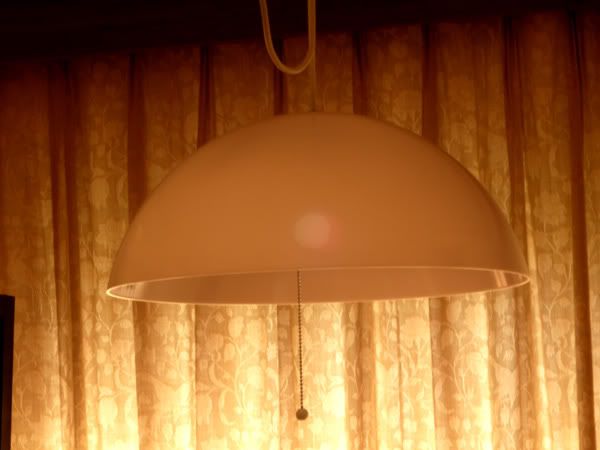
Here are some test shots that I took which shows the hotspot on the Tamron SP 90mm F2.5.
At F32:
At F16:
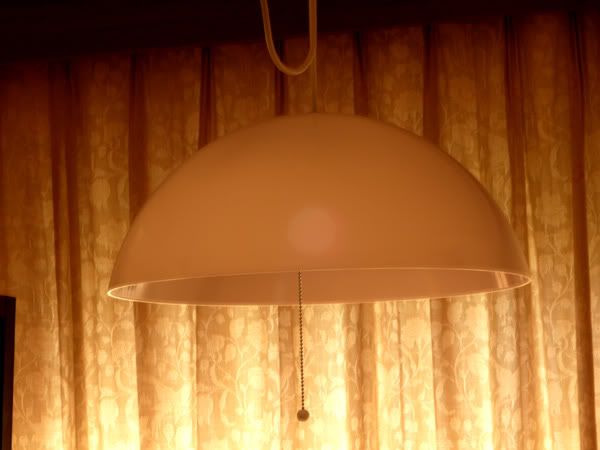
At F11:
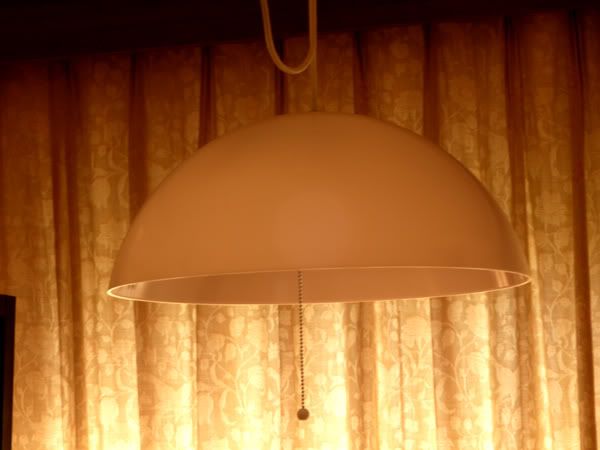
Although you can no longer see the spot at apertures larger than around F5.6 because the "spot" gets larger than the whole frame, the fact that the spot is still there, means the shot will be less contrasty because of the reflection off the flat rear element. |
|
| Back to top |
|
|
kds315*
Joined: 12 Mar 2008
Posts: 16905
Location: Kehl, Germany
Expire: 2021-03-09
|
Posted: Tue Feb 16, 2010 12:25 am Post subject: |
|
Posted: Tue Feb 16, 2010 12:25 am Post subject: |
|
|
kds315* wrote:
That could well be caused by a high IR sensitivity of the camera used (more precisely of a too weak internal blocking filter). I would try a a UV/IR cut filter on the lens and see if that hotspot disappears. Unfortunately good such filters are not cheap....
_________________
Klaus - Admin
"S'il vient a point, me souviendra" [Thomas Bohier (1460-1523)]
http://www.macrolenses.de for macro and special lens info
http://www.pbase.com/kds315/uv_photos for UV Images and lens/filter info
https://www.flickr.com/photos/kds315/albums my albums using various lenses
http://photographyoftheinvisibleworld.blogspot.com/ my UV BLOG
http://www.travelmeetsfood.com/blog Food + Travel BLOG
https://galeriafotografia.com Architecture + Drone photography
Currently most FAV lens(es):
X80QF f3.2/80mm
Hypergon f11/26mm
ELCAN UV f5.6/52mm
Zeiss UV-Planar f4/60mm
Zeiss UV-Planar f2/62mm
Lomo Уфар-12 f2.5/41mm
Lomo Зуфар-2 f4.0/350mm
Lomo ZIKAR-1A f1.2/100mm
Nikon UV Nikkor f4.5/105mm
Zeiss UV-Sonnar f4.3/105mm
CERCO UV-VIS-NIR f1.8/45mm
CERCO UV-VIS-NIR f4.1/94mm
CERCO UV-VIS-NIR f2.8/100mm
Steinheil Quarzobjektiv f1.8/50mm
Pentax Quartz Takumar f3.5/85mm
Carl Zeiss Jena UV-Objektiv f4/60mm
NYE OPTICAL Lyman-Alpha II f1.1/90mm
NYE OPTICAL Lyman-Alpha I f2.8/200mm
COASTAL OPTICS f4/60mm UV-VIS-IR Apo
COASTAL OPTICS f4.5/105mm UV-Micro-Apo
Pentax Ultra-Achromatic Takumar f4.5/85mm
Pentax Ultra-Achromatic Takumar f5.6/300mm
Rodenstock UV-Rodagon f5.6/60mm + 105mm + 150mm
|
|
| Back to top |
|
|
Attila

Joined: 24 Feb 2007
Posts: 57990
Expire: 2025-11-18
|
Posted: Tue Feb 16, 2010 12:29 am Post subject: |
|
Posted: Tue Feb 16, 2010 12:29 am Post subject: |
|
|
Attila wrote:
| Spotmatic wrote: |
I can only tell about my own experiences, and I have used several lenses from 1896 up to today. Most of my lenses are single-coated and some of them not even coated, and I'm not seeing any problems either. Of course, most of my uncoated prewar lenses are low contrast because of light shattering in the lens, but nothing that can't be corrected in PP.
A good modern example is my Sigma 500mm f/4.5 APO EX. Apparently there's an updated version available with "DG" in its name because it has a "special" digital coating. Well, my shots with the non-DG lens are nothing short of superb, so I don't feel the urge to upgrade just for a "better" coating.
Mind you: I don't say that the problem does not exist, just that I don't see it. Let's reserve this discussion for people who never take photographs, but only talk about it |
+1 |
|
| Back to top |
|
|
dnas
Joined: 14 Nov 2008
Posts: 488
Location: Japan
|
Posted: Tue Feb 16, 2010 2:21 am Post subject: |
|
Posted: Tue Feb 16, 2010 2:21 am Post subject: |
|
|
dnas wrote:
| kds315* wrote: |
| That could well be caused by a high IR sensitivity of the camera used (more precisely of a too weak internal blocking filter). I would try a a UV/IR cut filter on the lens and see if that hotspot disappears. Unfortunately good such filters are not cheap.... |
No, it's the reflection. I've used the same lens on different (brands & models) of camera, and it's the same. You can see the shape of the aperture blades. |
|
| Back to top |
|
|
Esox lucius

Joined: 26 Aug 2008
Posts: 2441
Location: Helsinki, Finland
Expire: 2011-11-18
|
Posted: Tue Feb 16, 2010 6:25 am Post subject: Re: Multicoated, Single Coated, Uncoated -- And dSLRs |
|
Posted: Tue Feb 16, 2010 6:25 am Post subject: Re: Multicoated, Single Coated, Uncoated -- And dSLRs |
|
|
Esox lucius wrote:
| Henry Fisher wrote: |
| More than a few have said that digital sensors are reflective, and as such, they require optics that have improved anti-reflective coatings. |
There is no denying newer coating technology improves image quality: My Nano-crystal coated (horrible marketing name by the way) Nikkors handle bright street lights better than older lenses. But... to say that you cannot/should not/are better off not using older, single-coated lenses on a D700; that is a load of horse shit, probably told by eager sales clerks at some photo store.
I am using the same sensor as you are (D700/D3) and I have yet to experience sensor-induced reflections/ghosts/hot spots in images. Not long ago I shot a test photo where I aimed an industrial Maglite straight into the viewfinder of the D3. Didn't reproduce any reflections.
I have seen hot spots glow in the center of the pic, that was using a pre-war design post-war manufactured CZJ Tessar 50/2.8 and a glass (magnifying) magnifying adapter on D3. When used wide open and shooting into the sun, I could reproduce a lot of burned highlights and a lens-shaped hotspot in the center of the image. Consequently, I placed some dust on the adapter and noticed hotspot is introduced by the adapter. This, however, does not have any implications for real photography: shooting lens wide open straight into the sun isn't exactly useful with Nano-crystal coated Nikkors either.
_________________
Vilhelm
Nikon DSLR: D4, D800, Nikon D3, D70
Nikon SLR: Nikon F100, Nikon FM2n
Nikkor MF: 20/2.8 Ai-S, 24/2 Ai-S, 24/2.8 Ai-S, 28/2 Ai-S, 28/2.8 Ai-S, 35/1.4 AIS, 35/2 Ai-S, 45/2.8 GN, 50/1.2 Ai, 50/1.2 Ai-S, 50/1.4 Ai, 50/1.4 Ai-S, 50/1.8 AI-S "long", 50/1.8 AI-S "short", 55/1.2 Ai, 85/1.4 Ai-S, 85/1.8H, 105/2.5 Ai, 135/2.8Q, 135/3.5 Ai, 180/2.8 Ai-S ED
Nikkor AF/AF-S FX: 14-24/2.8G, 16/2.8D Fisheye, 16-35/4G VR, 17-35/2.8D, 24/1.4G, 24/3.5D PC-E, 24/2.8D, 24-70/2.8G, 28/1.4D, 28/1.8G, 35/1.4G, 35/2D, 50/1.4D, 50/1.4G, 50/1.8G, 60/2.8 Micro, 60/2.8G Micro, 70-200/2.8G VR, 70-200/2.8G VR II, 80-400/4.5-5.6D VR, 85/1.4G, 85/2.8D PC-E Micro, 105/2D DC, 105/2.8G VR Micro, 135/2D DC, 200/2G VR, 200-400/4G VR, 300/2.8G VR, 300/4D ED, 400/2.8G VR, 800/5.6E VR
Nikkor AF/AF-S DX: 10.5/2.8G Fisheye, 12-24/4G, 18-70/3.5-4.5G
Topcor: Auto-Topcor 58/1.4,
Voigtländer SL: 40/2 Ultron, 58/1.4 Nokton, 75/2.5 Color-Heliar, 90/3.5 APO-Lanthar, 125/2.5 APO-Lanthar, 180/4 APO-Lanthar
Zeiss ZF: Planar T* 85/1.4 ZF
M42 SLR: Voigtländer Bessaflex TM
M42: Flektogon 20/4, Flektogon 35/2.4, Tessar 50/2.8 T, Super-Takumar 55/1.8, Biotar 58/2 T, Pentacon 135/2.8, Sonnar 135/3.5
Medium format: several Zeiss Super Ikonta 532/16 Opton-Tessar 80mm f/2.8, Zeiss Ikonta 524/16 Opton-Tessar 75mm f/3.5
Leica: R7, M4, Super-Angulon-R 4/21, Elmarit-R 2.8/28, Summicron-R 2/35, Summicron-M 2/35, Summicron-M 2/50, Elmarit-R 2,8/180 |
|
| Back to top |
|
|
|
|