| View previous topic :: View next topic |
| Author |
Message |
NiceDays 

Joined: 25 Jun 2021
Posts: 100
|
 Posted: Tue Apr 21, 2026 3:43 pm Post subject: Macro lens that does not fringe on wide open? |
|
Posted: Tue Apr 21, 2026 3:43 pm Post subject: Macro lens that does not fringe on wide open? |
|
|
NiceDays wrote:
I got Vivitar Series 1 105mm F/2.5 and its very sharp and bokeh is lovely however one thing bothers me is lots of blue fringing i am getting in the contrast edges when using it in landscape + bokeh on F/2.5 it becomes better closed down to F4, but i sometimes want max blur.
This is crop from 24mp, you can notice fringing on the bird left side.

another crop notice around edges of the boat cabin
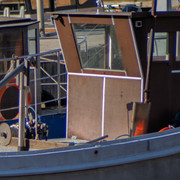
I can cure it in post, but sometimes its so stronger in one spot on the photo than another and applying extra amount of fringing suppression to clear heavily fringed spots of photo makes other moderately fringed edges become black and white in outline.
That's about only complaint i have for this lens other than that its perfect and of course aperture closed to f/5.6 or f/8 fringing is almost gone, but most time i love the background blur it gives and want to keep DoF as low as possible for max BG blur.
Is there any vintage macro lens that preforms as good but without blue/purple fringing?
I found this list of vintage macro lenses, but it have no budget to try them all, perhaps someone could share their experience.... |
|
| Back to top |
|
 |
kypfer

Joined: 27 Sep 2017
Posts: 617
Location: Jersey C.I.
|
Posted: Tue Apr 21, 2026 4:21 pm Post subject: |
|
Posted: Tue Apr 21, 2026 4:21 pm Post subject: |
|
|
kypfer wrote:
I've not seen similar symptoms when using my Tamron Adaptall-2 90mm f/2.5, but I rarely use it wide open, mostly because when being used for macro, which is what I bought it for, I stop down for depth of field. Bear in mind also there have been several incarnations of the Tamron, so there may be differences from that standpoint, also, with lenses of this vintage, there's always the possibility of previous "intervention" resulting in poor alignment. |
|
| Back to top |
|
|
stevemark

Joined: 29 Apr 2011
Posts: 5511
Location: Switzerland
|
Posted: Tue Apr 21, 2026 8:11 pm Post subject: Re: Macro lens that does not fringe on wide open? |
|
Posted: Tue Apr 21, 2026 8:11 pm Post subject: Re: Macro lens that does not fringe on wide open? |
|
|
stevemark wrote:
| NiceDays wrote: |
I got a Vivitar Series 1 105mm F/2.5 and its very sharp and bokeh is lovely however one thing bothers me is lots of blue fringing i am getting in the contrast edges when using it in landscape + bokeh on F/2.5
...
That's about only complaint i have for this lens other than that its perfect and of course aperture closed to f/5.6 or f/8 fringing is almost gone, but most time i love the background blur it gives and want to keep DoF as low as possible for max BG blur.
Is there any vintage macro lens that preforms as good but without blue/purple fringing?
|
Yes, for sure.
I'll try to find a similar subject as you have used, and take pictures with a few 90mm / 100mm / 105mm / 120mm macro lenses I own. Then you can decide yourself.
* Canon FD 4/100mm Macro
* Konica Hexanon 4/105mm Macro
* Mamiya Sekor C 4/120mm Macro
* Minolta Rokkor 3.5/100mm Macro
* Minolta Rokkor 4/100mm Macro
* Micro Nikkor Ai 4/105mm
* Micro Nikkor AiS 2.8/105mm
* Panagor (Komine) 2.8/90mm Macro
* Pentax M 4/100mm Macro
* Tamron SP 2.5/90mm Macro
* Vivitar (Kiron) 2.8/100mm Macro
* Yashica ML 3.5/100mm Macro
S
_________________
www.artaphot.ch |
|
| Back to top |
|
|
Noritar
Joined: 25 Jul 2024
Posts: 91
|
Posted: Wed Apr 22, 2026 1:46 am Post subject: |
|
Posted: Wed Apr 22, 2026 1:46 am Post subject: |
|
|
Noritar wrote:
Olympus OM 90mm f/2 Macro is another consideration. |
|
| Back to top |
|
|
jamaeolus

Joined: 19 Mar 2014
Posts: 3202
Location: Eugene
Expire: 2015-08-20
|
Posted: Wed Apr 22, 2026 2:02 am Post subject: |
|
Posted: Wed Apr 22, 2026 2:02 am Post subject: |
|
|
jamaeolus wrote:
The oly 90 f2 is a fantastic, albeit pricey, macro lens. It will likely retain its value ....so, if used gently can maintain or perhaps improve its value.
_________________
photos are moments frozen in time |
|
| Back to top |
|
|
Noritar
Joined: 25 Jul 2024
Posts: 91
|
Posted: Wed Apr 22, 2026 2:11 am Post subject: |
|
Posted: Wed Apr 22, 2026 2:11 am Post subject: |
|
|
Noritar wrote:
| jamaeolus wrote: |
| The oly 90 f2 is a fantastic, albeit pricey, macro lens. It will likely retain its value ....so, if used gently can maintain or perhaps improve its value. |
They don't seem to be very hot right now. Several of them available under $500. Not inexpensive, but that's a very nice lens for the price.
This page has some helpful test images: https://www.nikolaus-burgard.de/objektivvorstellungen-lens-reviews/olympus/olympus-om-zuiko-auto-macro-90mm-f2/ |
|
| Back to top |
|
|
xkaes
Joined: 28 Oct 2019
Posts: 177
Location: Colorado
|
Posted: Wed Apr 22, 2026 3:12 pm Post subject: Re: Macro lens that does not fringe on wide open? |
|
Posted: Wed Apr 22, 2026 3:12 pm Post subject: Re: Macro lens that does not fringe on wide open? |
|
|
xkaes wrote:
| NiceDays wrote: |
| I found this list of vintage macro lenses, but it have no budget to try them all, perhaps someone could share their experience.... |
That list is interesting, but far from complete. For example, it lists NONE of Minolta's numerous manual-focusing macro lenses, and includes no bellows lenses from any manufacturer. Must be AI-generated.
I have that Vivitar Series 1 105mm f2.5 and I think it's great, but it's designed for macro work, and when I use a macro lens I do almost no cropping of the final image. You're testing the lens with images it was not designed to produce. Neither of those two images are even close or macro range -- or even "close-up". That's what I would expect to see. Do you get that fringing when the lens takes macro shots? |
|
| Back to top |
|
|
NiceDays
Joined: 25 Jun 2021
Posts: 100
|
Posted: Thu Apr 23, 2026 2:39 pm Post subject: Re: Macro lens that does not fringe on wide open? |
|
Posted: Thu Apr 23, 2026 2:39 pm Post subject: Re: Macro lens that does not fringe on wide open? |
|
|
NiceDays wrote:
| stevemark wrote: |
| NiceDays wrote: |
I got a Vivitar Series 1 105mm F/2.5 and its very sharp and bokeh is lovely however one thing bothers me is lots of blue fringing i am getting in the contrast edges when using it in landscape + bokeh on F/2.5
...
That's about only complaint i have for this lens other than that its perfect and of course aperture closed to f/5.6 or f/8 fringing is almost gone, but most time i love the background blur it gives and want to keep DoF as low as possible for max BG blur.
Is there any vintage macro lens that preforms as good but without blue/purple fringing?
|
Yes, for sure.
I'll try to find a similar subject as you have used, and take pictures with a few 90mm / 100mm / 105mm / 120mm macro lenses I own. Then you can decide yourself.
* Canon FD 4/100mm Macro
* Konica Hexanon 4/105mm Macro
* Mamiya Sekor C 4/120mm Macro
* Minolta Rokkor 3.5/100mm Macro
* Minolta Rokkor 4/100mm Macro
* Micro Nikkor Ai 4/105mm
* Micro Nikkor AiS 2.8/105mm
* Panagor (Komine) 2.8/90mm Macro
* Pentax M 4/100mm Macro
* Tamron SP 2.5/90mm Macro
* Vivitar (Kiron) 2.8/100mm Macro
* Yashica ML 3.5/100mm Macro
S |
Wow impressive collection of macro lenses. Thanks for your help.
You can shoot anything with contrasty edges at bright sun wide open aperture it should produce that fringing especially towards edges of the frame.
| Noritar wrote: |
| Olympus OM 90mm f/2 Macro is another consideration. |
That's clearly out of my budget then. I rather considering 150-180mm 1:1 macro lens even though its F/3.5 because i don't like how getting too close is disturbing insects.
| xkaes wrote: |
| I have that Vivitar Series 1 105mm f2.5 and I think it's great, but it's designed for macro work, and when I use a macro lens I do almost no cropping of the final image. You're testing the lens with images it was not designed to produce. Neither of those two images are even close or macro range -- or even "close-up". That's what I would expect to see. Do you get that fringing when the lens takes macro shots? |
Technically macro lenses are good up to infinity so there should not be strict requirement to use them for just macro.
I did not play with it for long enough to see that fringing in macro.
When i go for a walk i like to take just one lens in this case macro and use for many different things rather than carry extra lenses and swap back and forth. |
|
| Back to top |
|
|
xkaes
Joined: 28 Oct 2019
Posts: 177
Location: Colorado
|
Posted: Thu Apr 23, 2026 6:02 pm Post subject: |
|
Posted: Thu Apr 23, 2026 6:02 pm Post subject: |
|
|
xkaes wrote:
Your forgetting a few things. Macro lenses are designed to have flat-fields of focus when focused at 1:1, so while you can focus to infinity, the edges will be less focused -- especially when used wide open. That might be contributing to the fringing. And although macros are super-sharp, their resolution is designed for macro work. At lower magnifications, the resolution will be lower as well -- especially when used wide open.
You can minimize these problems by stopping down, of course. |
|
| Back to top |
|
|
Mike Deep


Joined: 25 Oct 2008
Posts: 447
Location: Upstate New York
|
Posted: Thu Apr 23, 2026 11:10 pm Post subject: |
|
Posted: Thu Apr 23, 2026 11:10 pm Post subject: |
|
|
Mike Deep wrote:
This might be way off, but the Tokina AT-X/Vivitar S1 90/2.5 might be worth a look here. I want to say the few times I've used it wide open at or near infinity it had very little fringing (But not none).
_________________
Mike Deep Photography
Olympus: 21/3.5, 24/2.8 MC, 50/2, 50/1.4 MC, 135/2.8 MC
Nikon: C 24/2.8, C 28/2, Ai-S 28/2.8, K 35/2, K 35/2.8, C 55/1.2, AI 85/2, P 105/2.5 (5/3), 105/2.5 (5/4), F 135/2.8, Ai-S 180/2.8, No. 5T
Pentax: M 50/1.4, Auto-Tak 55/2, SMC Tak 100/4
Vivitar: 50/1.4 (Cosina), S1 90/2.5 (Tokina), 2x Macro TC
Etc: Distagon 35/2.8, Yashica ML 50/1.4, CZJ Pancolar 50/2, Rollei-HFT Planar 50/1.8, Sears Auto 55mm f1.4, Canon FL 55/1.2, Tomioka Yashinon 55/1.2, Sigma 90/2.8, CZ Sonnar T* 135/2.8, Isco Gottingen 180/2.8 |
|
| Back to top |
|
|
Noritar
Joined: 25 Jul 2024
Posts: 91
|
Posted: Fri Apr 24, 2026 12:26 am Post subject: |
|
Posted: Fri Apr 24, 2026 12:26 am Post subject: |
|
|
Noritar wrote:
Is there any chance something like 180 ED AIS Nikkor would focus close enough for your purposes, even though this isn't a "macro" lens? They are plentiful and you can't beat them for value. |
|
| Back to top |
|
|
xkaes
Joined: 28 Oct 2019
Posts: 177
Location: Colorado
|
Posted: Fri Apr 24, 2026 1:16 am Post subject: |
|
Posted: Fri Apr 24, 2026 1:16 am Post subject: |
|
|
xkaes wrote:
| Mike Deep wrote: |
| This might be way off, but the Tokina AT-X/Vivitar S1 90/2.5 might be worth a look here. I want to say the few times I've used it wide open at or near infinity it had very little fringing (But not none). |
But did you crop it as well? |
|
| Back to top |
|
|
NiceDays
Joined: 25 Jun 2021
Posts: 100
|
Posted: Sat Apr 25, 2026 10:06 am Post subject: |
|
Posted: Sat Apr 25, 2026 10:06 am Post subject: |
|
|
NiceDays wrote:
| xkaes wrote: |
| At lower magnifications, the resolution will be lower as well -- especially when used wide open. |
Interesting from reviews i've seen normal lenses always have less contrast on minimal focusing distances when wide open, i thought macro are made to avoid that limitation.
| Mike Deep wrote: |
| Tokina AT-X/Vivitar S1 90/2.5 |
Thats 1:2 macro i need 1:1, but i am big fan of Tokina AT-X especially 100-300mm F4 is very good.
What camera you used it on something tells me that FF Sony might not be ideal option for vintage lenses especially around corners as its has smallest mount that can cause additional vignetting and possibly fringing...
| Noritar wrote: |
| Is there any chance something like 180 ED AIS Nikkor would focus close enough for your purposes, even though this isn't a "macro" lens? They are plentiful and you can't beat them for value. |
Not a chance i like to get really close sometimes i use Raynox DCR-150 on macro lens to get even greater magnification e.g. for ants. |
|
| Back to top |
|
|
xkaes
Joined: 28 Oct 2019
Posts: 177
Location: Colorado
|
Posted: Sat Apr 25, 2026 2:17 pm Post subject: |
|
Posted: Sat Apr 25, 2026 2:17 pm Post subject: |
|
|
xkaes wrote:
| NiceDays wrote: |
| xkaes wrote: |
| At lower magnifications, the resolution will be lower as well -- especially when used wide open. |
Interesting from reviews i've seen normal lenses always have less contrast on minimal focusing distances when wide open, i thought macro are made to avoid that limitation. |
I think you are misunderstanding my point. As you state, normal lenses have less contrast (and definition) when focused close-up (especially wide open). They are not designed for macro work -- high magnification.
Conversely, my point is that the opposite is true for macro (and bellows) lenses. They are designed for close-up work and high magnification. When used for distant subjects -- especially when wide open -- their contrast and resolution will not be their best.
I've taken great close-up pictures with non-macro lens, and great distance shots with macro lenses, but the highest resolution will be achieved when a lens is used in the magnification range it was designed for. |
|
| Back to top |
|
|
Noritar
Joined: 25 Jul 2024
Posts: 91
|
Posted: Sun Apr 26, 2026 5:57 am Post subject: |
|
Posted: Sun Apr 26, 2026 5:57 am Post subject: |
|
|
Noritar wrote:
At the risk of heresy, you might also consider the older Pentax 100/2.8... FA. It's not strictly manual focus, but they're excellent and can be had for $150 sometimes. The previous "F" model is supposed to be similar and better built. |
|
| Back to top |
|
|
iso rivolta

Joined: 16 Aug 2023
Posts: 15
|
Posted: Sun Apr 26, 2026 9:16 am Post subject: |
|
Posted: Sun Apr 26, 2026 9:16 am Post subject: |
|
|
iso rivolta wrote:
| Noritar wrote: |
| At the risk of heresy, you might also consider the older Pentax 100/2.8... FA. It's not strictly manual focus, but they're excellent and can be had for $150 sometimes. The previous "F" model is supposed to be similar and better built. |
In my opinion this is one of the worst modern macro lenses regarding fringing when wide open, together with its sibling, the Tokina AT-X 100mm f2.8 macro (design licensed from Pentax). So I would not recommend the F, FA or DFA versions if you need minimal fringing wide open.
Ricoh released in 2022 the ED version specifically to take care of the excessive fringing. |
|
| Back to top |
|
|
stevemark
Joined: 29 Apr 2011
Posts: 5511
Location: Switzerland
|
Posted: Sun Apr 26, 2026 1:48 pm Post subject: |
|
Posted: Sun Apr 26, 2026 1:48 pm Post subject: |
|
|
stevemark wrote:
If you want to be on safe side you have to buy a modern lens with lots of ED glass.
On the other hand I now became interested in how these old lenses would behave, and I found a few more laying around:
* Canon FD 4/100mm Macro
* Konica Hexanon 4/105mm Macro
* Mamiya Sekor C 4/120mm Macro
* Minolta Rokkor 3.5/100mm Macro
* Minolta Rokkor 4/100mm Macro
* Minolta AF 2.8/100mm Macro
* Micro Nikkor Ai 4/105mm
* Micro Nikkor AiS 2.8/105mm
* Nikkor AF 2.8/105mm (original version)
* Panagor (Komine) 2.8/90mm Macro
* Pentax M 4/100mm Macro
* Sigma DG EX 2.8/105mm Macro
* Tamron SP 2.5/90mm Macro
* Vivitar (Kiron) 2.8/100mm Macro
* Yashica ML 3.5/100mm Macro
However I didn't find some real shiny things to start testing ...!
Would something like that be OK? First the entire image (overview), then the 100% crop (24 Mp FF):


Or better something like that? Again first the (resized) overview, then the 100% crop:


Let me know. I'd have time to do test series either tomorrow (Monday) or later in the week (no sun here on Wed / Thu, probably).
What scale would you be interested in? 1:20?, 1:10? 1:5? And better 43 MP or 24 MP FF? Let me know.
S
_________________
www.artaphot.ch
Last edited by stevemark on Sun Apr 26, 2026 6:19 pm; edited 1 time in total |
|
| Back to top |
|
|
Noritar
Joined: 25 Jul 2024
Posts: 91
|
Posted: Sun Apr 26, 2026 6:09 pm Post subject: |
|
Posted: Sun Apr 26, 2026 6:09 pm Post subject: |
|
|
Noritar wrote:
| iso rivolta wrote: |
| Noritar wrote: |
| At the risk of heresy, you might also consider the older Pentax 100/2.8... FA. It's not strictly manual focus, but they're excellent and can be had for $150 sometimes. The previous "F" model is supposed to be similar and better built. |
In my opinion this is one of the worst modern macro lenses regarding fringing when wide open, together with its sibling, the Tokina AT-X 100mm f2.8 macro (design licensed from Pentax). So I would not recommend the F, FA or DFA versions if you need minimal fringing wide open.
Ricoh released in 2022 the ED version specifically to take care of the excessive fringing. |
Fair enough... I didn't know that the AT-X 100/2.8 was licensed from Pentax. Are the Pentax and Tokina's identical optical designs with different coatings? |
|
| Back to top |
|
|
iso rivolta
Joined: 16 Aug 2023
Posts: 15
|
Posted: Tue Apr 28, 2026 1:24 pm Post subject: |
|
Posted: Tue Apr 28, 2026 1:24 pm Post subject: |
|
|
iso rivolta wrote:
Yes, as far as I know the Tokina AT-X M100 Pro D 100mm f2.8 Macro and the FiRIN 100mm F2.8 FE Macro use exactly the same optical formula as the Pentax DFA. The coatings could be different. Not to be confused with the previous Tokina macro lens, the AT-X AF100 Macro Internal Focus that goes only to 1:2 magnification and was tested by caspert79 here: https://forum.mflenses.com/interesting-macro-lens-find-t84094.html |
|
| Back to top |
|
|
lumens pixel
Joined: 27 Feb 2019
Posts: 1128
Expire: 2021-06-25
|
Posted: Tue Apr 28, 2026 2:57 pm Post subject: |
|
Posted: Tue Apr 28, 2026 2:57 pm Post subject: |
|
|
lumens pixel wrote:
I do not remember having seen CA on the Minolta 100 f4,0 Macro.
_________________
Lumens Pixel
-------------
Minolta SR mount: 16 2,8; Sigma SuperWide 24 2,8; 28 2,5; 28 2,8; 28 3,5; 35 2,8; 45 2,0; 50 1,4; 50 1,7; 50 2,0; 58 1,4; 85 2,0; 100 2,5; 100 4 Macro; 135 3,5; 135 2,8; 200 4; RF 250 5,6; 24-35 3,5; 35-70 3,5; 75-150 4; 70-210 4
Canon FD mount: Tokina RMC 17 3,5; 28 2,8; 35 2,8; 50 1,8; 50 3,5 Macro; 55 1,2; 135 3,5; 135 2,5; 200 4,0; 300 5,6; 28-55 3,5 4,5; Tokina SZ-X SD 270; 70-150 4,5; 70-210 f4; 80-200 4L; Tokina SZ-X 845
Tamron Adaptall: 28-80 3,5-4,2 (27A); 70-210 3,8-4 (46A); 60-300 (23A); 90 2,5 (52B); 35-135 3,5-4,5 (40A)
Tamron SP: 20-40 2,7-3,5 (266D) |
|
| Back to top |
|
|
stevemark
Joined: 29 Apr 2011
Posts: 5511
Location: Switzerland
|
Posted: Tue Apr 28, 2026 3:09 pm Post subject: |
|
Posted: Tue Apr 28, 2026 3:09 pm Post subject: |
|
|
stevemark wrote:
| stevemark wrote: |
|
That one was shot using Minolta MD 4/100mm at f4 (wide open).
The lens certainly does fringe less than most vintage 100mm macros, but under harsh condition you'll see it, especially in the corners.
As far as I remember at 5.6 it's already pretty clean.
It's raining here now, so no way to do the test I promisd earlier on ...
S
_________________
www.artaphot.ch |
|
| Back to top |
|
|
caspert79

Joined: 31 Oct 2010
Posts: 3916
Location: The Netherlands
|
Posted: Sun May 03, 2026 7:13 am Post subject: |
|
Posted: Sun May 03, 2026 7:13 am Post subject: |
|
|
caspert79 wrote:
The Minolta MD 100mm f/4 macro is a lens I can absolutely recommend, and they’re often dirt cheap. |
|
| Back to top |
|
|
stevemark
Joined: 29 Apr 2011
Posts: 5511
Location: Switzerland
|
Posted: Sun May 03, 2026 1:38 pm Post subject: |
|
Posted: Sun May 03, 2026 1:38 pm Post subject: |
|
|
stevemark wrote:
| caspert79 wrote: |
| The Minolta MD 100mm f/4 macro is a lens I can absolutely recommend, and they’re often dirt cheap. |
Absolutely. Clearly better (=nearly perfect) than e. g. the Nikkor AiS 2.8/105mm for landscapes at infinity, even wide open: No CAs on 24 MP FF, sharp corners as well.
I've chosen this lens e. g. for critical professional work documenting church treasuries such as golden calices, monstrances and finely woven magnificent robes. The former are very sensitive to longitudinal CAs, the latter require highest resolution and a lens without lateral CAs. The MD-III 4/100mm Macro did fulfil both requirements perfectly even on 50 MP class cameras when stopped down to f5.6 or f8.
S
_________________
www.artaphot.ch |
|
| Back to top |
|
|
Gerald

Joined: 25 Mar 2014
Posts: 1292
Location: Brazil
|
Posted: Tue May 05, 2026 10:06 pm Post subject: Re: Macro lens that does not fringe on wide open? |
|
Posted: Tue May 05, 2026 10:06 pm Post subject: Re: Macro lens that does not fringe on wide open? |
|
|
Gerald wrote:
| NiceDays wrote: |
I got Vivitar Series 1 105mm F/2.5 and its very sharp and bokeh is lovely however one thing bothers me is lots of blue fringing...
|
Yes, there is strong blue fringing, but I can also see a lot of spherical aberration... But, before writing off the lens, the first question that must be answered is: is it functioning as it should?
The Vivitar Series 1 105mm F2.5 Macro lens is about 50 years old. Probably, the OP's copy has already undergone CLA at least once. In my opinion, any lens that goes through a disassembly is suspect. Some lenses are never the same again after disassembly and reassembly. I have some lenses (CZJ Biometar 80mm F2.8 and Flektogon 20mm F2.8 ) where simply rotating one of the elements from its original position noticeably worsens the performance. An individual lens is circularly symmetrical, so its behaviour should not vary with the angular position, right? Well, in practice, things are a little more complicated.
Im my opinion, the Vivitar 105mm F2.5 is a lens with too optimistic specifications. It's a lens that aims to be fast (F2.5), focusing from 35cm (1:1 macro) to infinity, and all with only 6 optical elements. Too good to be true? Certainly, something had to be sacrificed, for example, the performance at full aperture. Just for comparison, a modern macro lens, like the Nikon Z 105mm F2.8 Macro, uses 16 optical elements, and the correspondent macro lenses from Sony and Canon use 17 optical elements! Furthermore, these three lenses use special optical glasses, aspherical lenses, and floating elements.
_________________
If raindrops were perfect lenses, the rainbow did not exist. |
|
| Back to top |
|
|
kiddo
Joined: 29 Jun 2018
Posts: 1630
|
Posted: Tue May 05, 2026 10:30 pm Post subject: |
|
Posted: Tue May 05, 2026 10:30 pm Post subject: |
|
|
kiddo wrote:
| stevemark wrote: |
| caspert79 wrote: |
| The Minolta MD 100mm f/4 macro is a lens I can absolutely recommend, and they’re often dirt cheap. |
Absolutely. Clearly better (=nearly perfect) than e. g. the Nikkor AiS 2.8/105mm for landscapes at infinity, even wide open: No CAs on 24 MP FF, sharp corners as well.
I've chosen this lens e. g. for critical professional work documenting church treasuries such as golden calices, monstrances and finely woven magnificent robes. The former are very sensitive to longitudinal CAs, the latter require highest resolution and a lens without lateral CAs. The MD-III 4/100mm Macro did fulfil both requirements perfectly even on 50 MP class cameras when stopped down to f5.6 or f8.
S |
MD 70-150mm f4 is a good one ,how would you compare it to the f4 macro version you mention? For landscapes and details high resolution? |
|
| Back to top |
|
|
|
|
 Español
 中文
 Magyar
 Русский
 Deutsch
 日本語
 Français



