| View previous topic :: View next topic |
| Author |
Message |
LittleAlex 


Joined: 27 Nov 2008
Posts: 2085
Location: L'vov (Western Ukraine)
|
 Posted: Mon Aug 03, 2026 6:15 pm Post subject: Industar 61 L/D 2.8/50mm RF vs Tessar 2.8/50mm aus JENA DDR |
|
Posted: Mon Aug 03, 2026 6:15 pm Post subject: Industar 61 L/D 2.8/50mm RF vs Tessar 2.8/50mm aus JENA DDR |
|
|
LittleAlex wrote:
Camera Canon R8 ISO 800
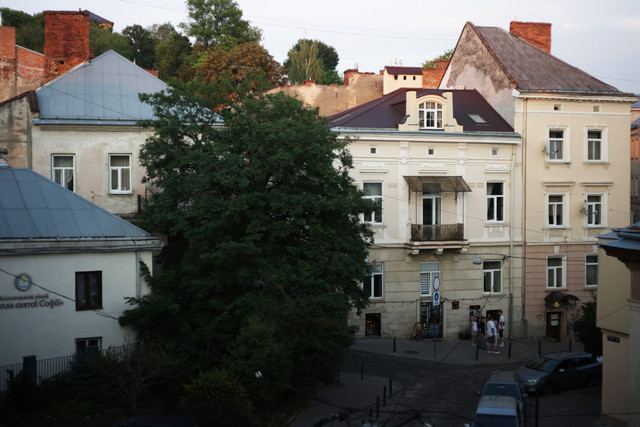
Tessar 2.8
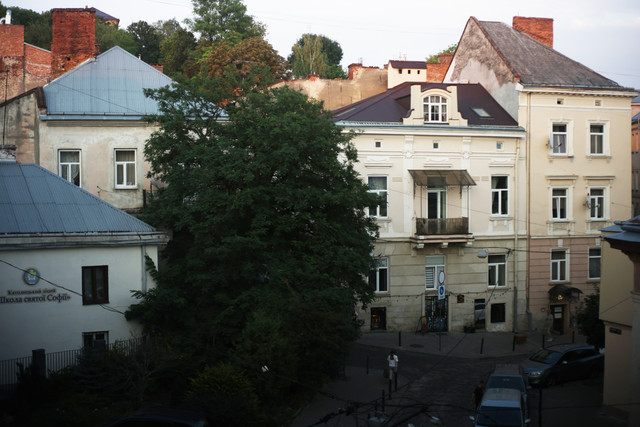
I-61 2.8
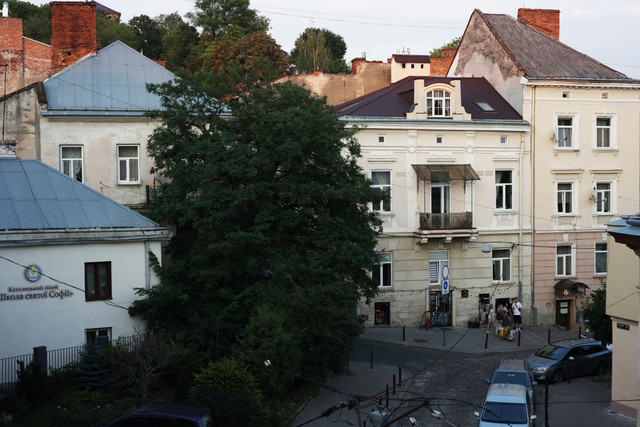
Tessar 8.0
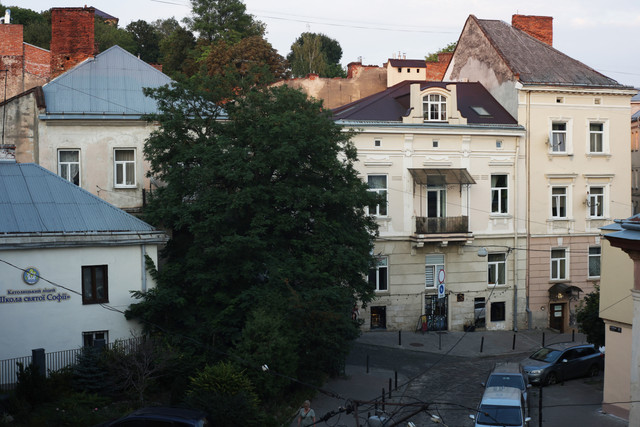
I-61 8.0
_________________
"Sharpness is a bourgeois concept" - © H. Cartier Bresson |
|
| Back to top |
|
 |
LittleAlex
Joined: 27 Nov 2008
Posts: 2085
Location: L'vov (Western Ukraine)
|
Posted: Thu Aug 06, 2026 8:20 pm Post subject: |
|
Posted: Thu Aug 06, 2026 8:20 pm Post subject: |
|
|
LittleAlex wrote:
Really I don't see any significant difference between both lenses.
Both samples however are from the better side.
“aus JENA DDR” means the lens “Tessar” had been produced for the western marked. Which means much better quality control.
And “Industar” has the number beginning with 90-th. Which means year of its production. And at that time the optical factories in the farmer USSR raised general quality of production considerably. For certain political reasons.
I would even say that at 2.8 “Industar” gives some better results than “Tessar”. However there are some insignificant problems at the right side. Which don’t disappear even at 8.0
_________________
"Sharpness is a bourgeois concept" - © H. Cartier Bresson |
|
| Back to top |
|
|
Ultrapix
Joined: 06 Jan 2012
Posts: 689
Location: Italy
|
Posted: Fri Aug 07, 2026 1:20 pm Post subject: |
|
Posted: Fri Aug 07, 2026 1:20 pm Post subject: |
|
|
Ultrapix wrote:
| LittleAlex wrote: |
Really I don't see any significant difference between both lenses.
Both samples however are from the better side.
“aus JENA DDR” means the lens “Tessar” had been produced for the western marked. Which means much better quality control.
And “Industar” has the number beginning with 90-th. Which means year of its production. And at that time the optical factories in the farmer USSR raised general quality of production considerably. For certain political reasons.
I would even say that at 2.8 “Industar” gives some better results than “Tessar”. However there are some insignificant problems at the right side. Which don’t disappear even at 8.0 |
Yes the Industar looks better on the left side, but the Tessar is better centered |
|
| Back to top |
|
|
stevemark

Joined: 29 Apr 2011
Posts: 5511
Location: Switzerland
|
Posted: Fri Aug 07, 2026 2:00 pm Post subject: |
|
Posted: Fri Aug 07, 2026 2:00 pm Post subject: |
|
|
stevemark wrote:
| LittleAlex wrote: |
“aus JENA DDR” means the lens “Tessar” had been produced for the western marked. Which means much better quality control.
And “Industar” has the number beginning with 90-th. Which means year of its production. And at that time the optical factories in the farmer USSR raised general quality of production considerably. For certain political reasons.
I would even say that at 2.8 “Industar” gives some better results than “Tessar”. However there are some insignificant problems at the right side. Which don’t disappear even at 8.0 |
I was about to ask whether the Tessar was the early (and pretty lousy) pre-war computation or the latter post war - now I know  .
BTW the most comprehensive history of the Tessar was published by zeissikonveb.de:
https://zeissikonveb.de/start/objektive/normalobjektive/tessar.html
The post-war computation from 1947 (by Harry Zöllner) was produced from 1949 until 1988; with at least 2'895'600 units it was one of the most successful lenses ever made.
S
_________________
www.artaphot.ch |
|
| Back to top |
|
|
LittleAlex
Joined: 27 Nov 2008
Posts: 2085
Location: L'vov (Western Ukraine)
|
Posted: Fri Aug 07, 2026 7:45 pm Post subject: |
|
Posted: Fri Aug 07, 2026 7:45 pm Post subject: |
|
|
LittleAlex wrote:
| stevemark wrote: |
The post-war computation from 1947 (by Harry Zöllner) was produced from 1949 until 1988; with at least 2'895'600 units it was one of the most successful lenses ever made.
|
Well, I believe it really was post-war DDR computation with the lanthanum glass.
The soviet Industar-61 with the lanthanum glass, I believe, was completely independent computation.
RF lenses for FED cameras were produced in enormous quantities. So, the quality was quite elusive, from sample to sample.
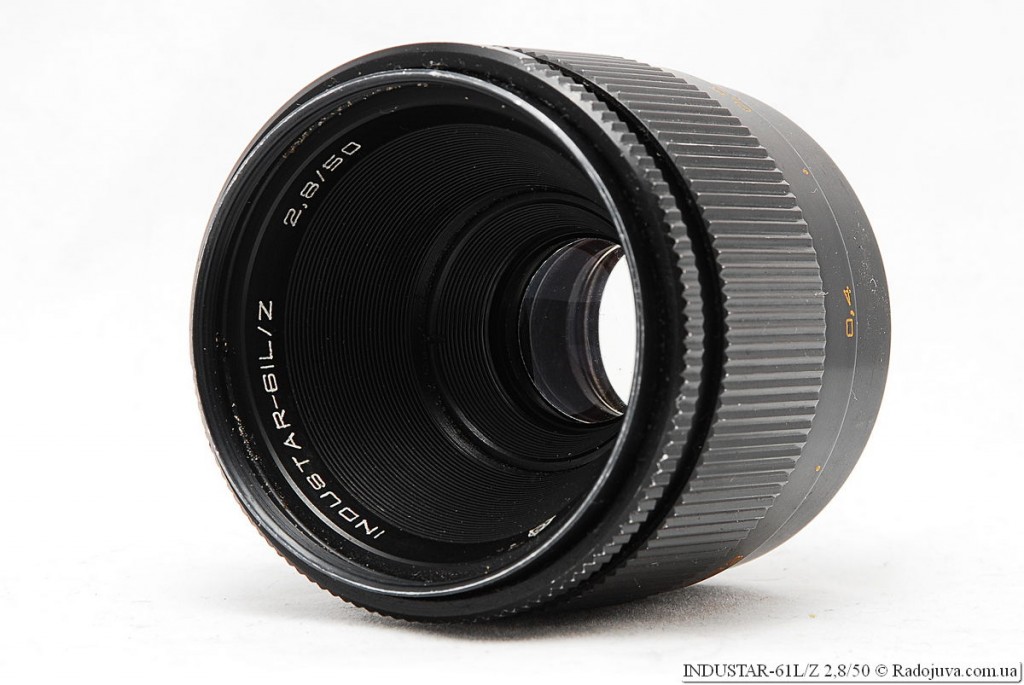
But there had been also version of the same lens with MC for M42 SLR cameras.
INDUSTAR-61L/Z 2,8/50
https://radojuva.com/en/2011/08/obzor-industar-61-lz-ms/
https://youtu.be/FM4vD__5sjU?si=HcEm-92MzkIykl29
https://youtu.be/O9DACmraE-g?si=GdVW_Nll3YhLAEuq
Witch generally were produced by other factories. And were of much better quality. Generally even better then DDR Tessars.
But there had been no automatic diafragm.
_________________
"Sharpness is a bourgeois concept" - © H. Cartier Bresson |
|
| Back to top |
|
|
stevemark
Joined: 29 Apr 2011
Posts: 5511
Location: Switzerland
|
Posted: Sat Aug 08, 2026 6:49 pm Post subject: |
|
Posted: Sat Aug 08, 2026 6:49 pm Post subject: |
|
|
stevemark wrote:
@ Alex:
Thank you for this additional information - especially about the ex-soviet lenses.
Nearly everything that happened at that time "behind the iron curtain" was unknown to us; certainly we didn't have any information about cameras and lenss from the late Soviet Union ... I well remember - as a kid in Nother Germany (West) - standing at the borders of the Elbe river and looking - with binoculars - into the Eastern part: A crazy and incredibly sad experience. I'm still shuddering.
Everything over there was very far away for us - until Gorbachev met Reagan, for the very first time, personally in Geneva, on behalf of the then Swiss president Kurt Furgler, who had invested quite a lot of energy in bringing the two men together.
S
_________________
www.artaphot.ch |
|
| Back to top |
|
|
martinsmith99

Joined: 31 Aug 2008
Posts: 7029
Location: S Glos, UK
Expire: 2013-11-18
|
Posted: Tue Aug 11, 2026 7:22 am Post subject: |
|
Posted: Tue Aug 11, 2026 7:22 am Post subject: |
|
|
martinsmith99 wrote:
The Tessar seemed to have a touch more saturation, but not really a diffenece in the 2 lenses.
I have a couple of Industars and really like them. I briefly owned a Tessar, but it had a few `issues'.
_________________
Casual attendance these days |
|
| Back to top |
|
|
alex_d
Joined: 19 Jan 2019
Posts: 553
|
Posted: Tue Aug 11, 2026 9:29 pm Post subject: Re: Industar 61 L/D 2.8/50mm RF vs Tessar 2.8/50mm aus JENA |
|
Posted: Tue Aug 11, 2026 9:29 pm Post subject: Re: Industar 61 L/D 2.8/50mm RF vs Tessar 2.8/50mm aus JENA |
|
|
alex_d wrote:
im not sure what to reply or to think bout this 'lens test' ..
it looks to me as you take a Land Rover Series * and a Land Cruiser J*,
then make a run to the local out-of-city super-super-supermarket to test which one is faster and which one is more handy for the job
...
*
_________________
**
// See my selling items in the Market place
now with pics
** |
|
| Back to top |
|
|
Paulius


Joined: 25 Nov 2014
Posts: 330
Location: Connecticut
|
Posted: Wed Aug 19, 2026 12:14 am Post subject: |
|
Posted: Wed Aug 19, 2026 12:14 am Post subject: |
|
|
Paulius wrote:
Back in Soviet Lithuania, using some connection and overpaying I purchased the camera of my dream, Zenit-E with industar 61L. It was only lens I have till emigration in 1979. The lens is good, but camera collapsed after 5 years of not so intensive usage and gone. Many years later, during the Perestroyka's flood of soviet photo gadgets, I took a FED-5 with this lens for curiosity. It apeares miserable in comparison to Leitz optic. I reached the same conclusion trying it on Sony A7R2 recently. Nonhing special. |
|
| Back to top |
|
|
|
|
|
You cannot post new topics in this forum
You cannot reply to topics in this forum
You cannot edit your posts in this forum
You cannot delete your posts in this forum
You cannot vote in polls in this forum
|
 Español
 中文
 Magyar
 Русский
 Deutsch
 日本語
 Français



