| View previous topic :: View next topic |
| Author |
Message |
mouks
Joined: 22 Jun 2024
Posts: 45
Location: Switzerland
|
 Posted: Wed Nov 13, 2024 10:02 pm Post subject: Sony A9 + Minolta MC Zoom Rokkor 40-80mm f/2.8 |
|
Posted: Wed Nov 13, 2024 10:02 pm Post subject: Sony A9 + Minolta MC Zoom Rokkor 40-80mm f/2.8 |
|
|
mouks wrote:
Shot at 40mm f/5.6 ISO400 1/125s, quickly edited in Windows Photo Editor
 |
|
| Back to top |
|
 |
RokkorDoctor


Joined: 27 Nov 2021
Posts: 1559
Location: Kent, UK
Expire: 2025-05-01
|
Posted: Thu Nov 14, 2024 11:49 am Post subject: |
|
Posted: Thu Nov 14, 2024 11:49 am Post subject: |
|
|
RokkorDoctor wrote:

Quite a different experience, shooting with this lens, don't you find?
Optically I find it decent enough, but I don't use it much myself; the haptics are an acquired taste, especially when trying to shoot in macro mode.
_________________
Mark
SONY A7S, A7RII + dust-sealed modded Novoflex/Fotodiox/Rayqual MD-NEX adapters
Minolta SR-1, SRT-101/303, XD7/XD11, XGM, X700
Bronica SQAi
Ricoh GX100
Minolta majority of all Rokkor SR/AR/MC/MD models made
Sigma 14mm/3.5 for SR mount
Tamron SP 60B 300mm/2.8 (Adaptall)
Samyang T-S 24mm/3.5 (Nikon mount, DIY converted to SR mount)
Schneider-Kreuznach PC-Super-Angulon 28mm/2.8 (SR mount)
Bronica PS 35/40/50/65/80/110/135/150/180/200/250mm |
|
| Back to top |
|
|
mouks
Joined: 22 Jun 2024
Posts: 45
Location: Switzerland
|
Posted: Thu Nov 14, 2024 4:50 pm Post subject: |
|
Posted: Thu Nov 14, 2024 4:50 pm Post subject: |
|
|
mouks wrote:
| RokkorDoctor wrote: |
Quite a different experience, shooting with this lens, don't you find?
Optically I find it decent enough, but I don't use it much myself; the haptics are an acquired taste, especially when trying to shoot in macro mode. |
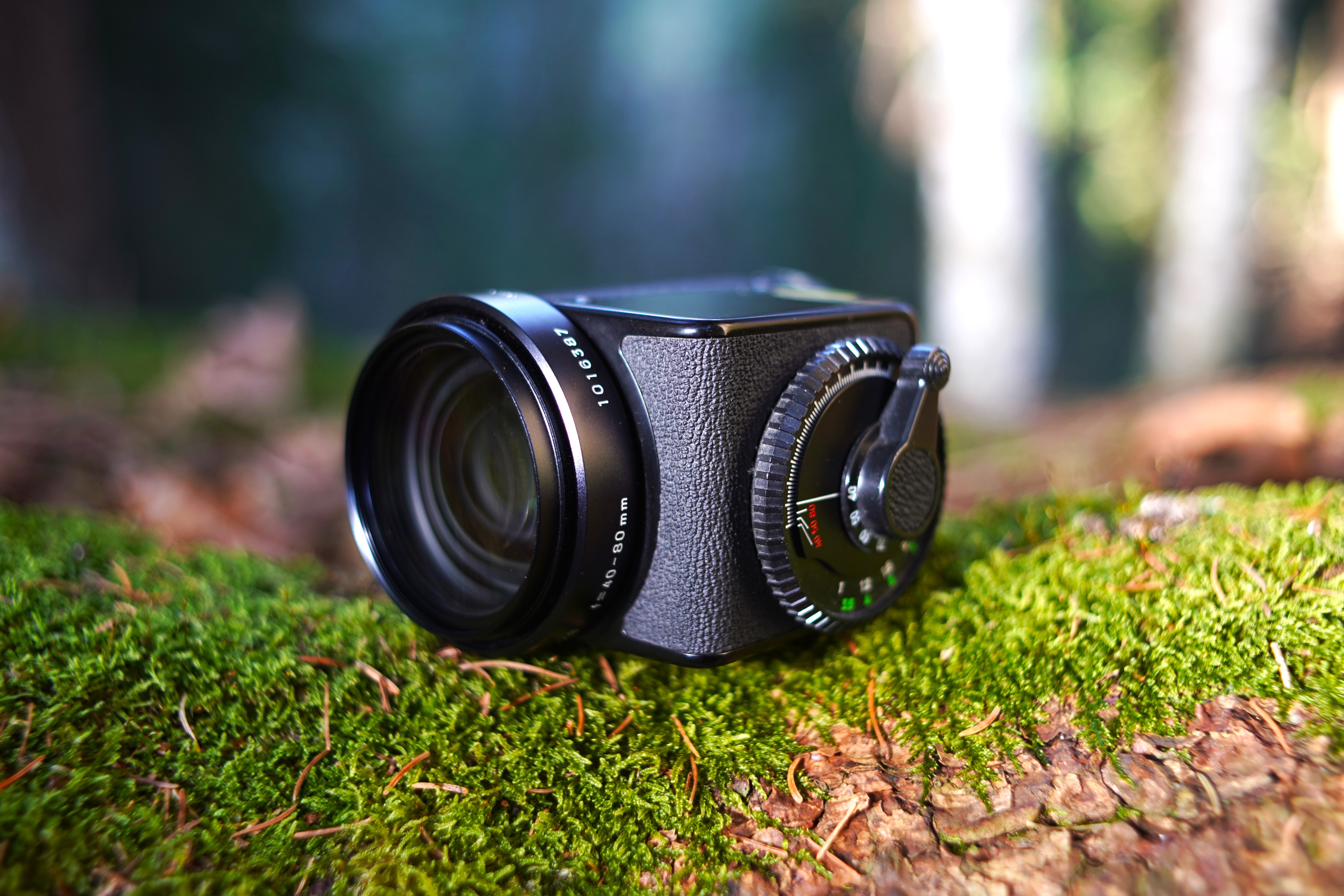
Thanks, regarding the controls, that's the main downside mentioned in all reviews I found about this lens. Actually I have a completely different opinion and I love them! I almost wish all lenses had a similar layout  , maybe that's because I'm used to follow focus units. I find that having the focus control on the side allows much more precision while keeping a good steady grip on the lens/camera, and the focus ring on my copy is almost as smooth as my Rokkor primes, it doesn't feel as heavily dampened though. , maybe that's because I'm used to follow focus units. I find that having the focus control on the side allows much more precision while keeping a good steady grip on the lens/camera, and the focus ring on my copy is almost as smooth as my Rokkor primes, it doesn't feel as heavily dampened though.
Unfortunately I can't say the same about the zoom control, if it was smoother and if the lens was parfocal, that would be perfect for filming with a compact setup. Although it's super fast to change the focal length, also while steadily holding the camera, which is still useful for photo use. And it always keeps the same relatively small size.
The macro mode is kind of useless on this lens IMO, it only allows closer focusing at the wider end and it still isn't that close (unless there's an issue on my copy). The 35-70mm macro is much better in this regard. By the way, I need to do some tests comparing these two. But so far I'm really pleased with the optical performance and rendering of this 40-80mm |
|
| Back to top |
|
|
NerdyTimelapser

Joined: 26 Feb 2025
Posts: 10
Location: Netherlands
|
Posted: Wed Jul 30, 2025 5:26 pm Post subject: |
|
Posted: Wed Jul 30, 2025 5:26 pm Post subject: |
|
|
NerdyTimelapser wrote:
Wow never heard of this lens before, very interesting layout! |
|
| Back to top |
|
|
NerdyTimelapser
Joined: 26 Feb 2025
Posts: 10
Location: Netherlands
|
Posted: Wed Jul 30, 2025 5:27 pm Post subject: |
|
Posted: Wed Jul 30, 2025 5:27 pm Post subject: |
|
|
NerdyTimelapser wrote:
Love that bit of sun catching the mountain also |
|
| Back to top |
|
|
RokkorDoctor
Joined: 27 Nov 2021
Posts: 1559
Location: Kent, UK
Expire: 2025-05-01
|
Posted: Wed Jul 30, 2025 7:32 pm Post subject: |
|
Posted: Wed Jul 30, 2025 7:32 pm Post subject: |
|
|
RokkorDoctor wrote:
| NerdyTimelapser wrote: |
| Wow never heard of this lens before, very interesting layout! |
Yes, interesting indeed but Minolta wisely decided not to carry this configuration forward to other zoom lenses. I have serviced many Minolta lenses including this 40-80mm zoom lens as well as other Minolta zoom lenses. In comparison this 40-80mm lens has far, far more components in its construction. This must have been an expensive one to produce & time-consuming one to assemble, and I can see why Minolta decided for a more conventional and much more cost-effective construction in their other zooms.
It has some unusual features though for a zoom lens, the most easily overlooked one is that it has unit focusing. Once a focal length has been set on the lens then focus is achieved by moving the entire optical construction forwards and backwards as a unit, just like traditional lenses of fixed focal length.
Mathematically, from an engineering perspective the whole zoom & focus arrangement is very interesting, using cams & slots for the zoom action and a moveable fulcrum linked to the zoom control to change the mechanical focus range. (actually it has two fulcrums for the focus "balance"; one linked to the zoom control and the other linked to the macro lever.) This is one of those lenses that is impossible to explain to someone else how it works, but once you have it in front of you with the mechanism exposed and you are operating the zoom & focus controls, it suddenly all makes sense.
But it's main drawback is that it violates Abbe's principle. The internal zoom groups slide along guide rails, but the actuator for this movement is offset to the side of the lens. This means that the slightest amount of play in the guide rail contact (and there must be some otherwise the mechanism would bind up) results in an ever so slight hysteresis on the focus action. This becomes more noticeable as the lens exhibits more wear over time.
_________________
Mark
SONY A7S, A7RII + dust-sealed modded Novoflex/Fotodiox/Rayqual MD-NEX adapters
Minolta SR-1, SRT-101/303, XD7/XD11, XGM, X700
Bronica SQAi
Ricoh GX100
Minolta majority of all Rokkor SR/AR/MC/MD models made
Sigma 14mm/3.5 for SR mount
Tamron SP 60B 300mm/2.8 (Adaptall)
Samyang T-S 24mm/3.5 (Nikon mount, DIY converted to SR mount)
Schneider-Kreuznach PC-Super-Angulon 28mm/2.8 (SR mount)
Bronica PS 35/40/50/65/80/110/135/150/180/200/250mm |
|
| Back to top |
|
|
NerdyTimelapser
Joined: 26 Feb 2025
Posts: 10
Location: Netherlands
|
Posted: Thu Jul 31, 2025 4:12 pm Post subject: |
|
Posted: Thu Jul 31, 2025 4:12 pm Post subject: |
|
|
NerdyTimelapser wrote:
| RokkorDoctor wrote: |
| NerdyTimelapser wrote: |
| Wow never heard of this lens before, very interesting layout! |
Yes, interesting indeed but Minolta wisely decided not to carry this configuration forward to other zoom lenses. I have serviced many Minolta lenses including this 40-80mm zoom lens as well as other Minolta zoom lenses. In comparison this 40-80mm lens has far, far more components in its construction. This must have been an expensive one to produce & time-consuming one to assemble, and I can see why Minolta decided for a more conventional and much more cost-effective construction in their other zooms.
It has some unusual features though for a zoom lens, the most easily overlooked one is that it has unit focusing. Once a focal length has been set on the lens then focus is achieved by moving the entire optical construction forwards and backwards as a unit, just like traditional lenses of fixed focal length.
Mathematically, from an engineering perspective the whole zoom & focus arrangement is very interesting, using cams & slots for the zoom action and a moveable fulcrum linked to the zoom control to change the mechanical focus range. (actually it has two fulcrums for the focus "balance"; one linked to the zoom control and the other linked to the macro lever.) This is one of those lenses that is impossible to explain to someone else how it works, but once you have it in front of you with the mechanism exposed and you are operating the zoom & focus controls, it suddenly all makes sense.
But it's main drawback is that it violates Abbe's principle. The internal zoom groups slide along guide rails, but the actuator for this movement is offset to the side of the lens. This means that the slightest amount of play in the guide rail contact (and there must be some otherwise the mechanism would bind up) results in an ever so slight hysteresis on the focus action. This becomes more noticeable as the lens exhibits more wear over time. |
Wow great extra explanation, thanks! |
|
| Back to top |
|
|
mouks
Joined: 22 Jun 2024
Posts: 45
Location: Switzerland
|
Posted: Fri Sep 12, 2025 11:02 am Post subject: |
|
Posted: Fri Sep 12, 2025 11:02 am Post subject: |
|
|
mouks wrote:
Hey, sorry for the late reply, my camera has been resting for a few months and I didn't catch up with the forum. That's a very interesting lens indeed, in addition to the great insight from Rokkordoctor, here is a link to a complete teardown if you want to see how it works https://www.lensrentals.com/blog/2017/09/the-minolta-40-80mm-f2-8-gearbox-zoom-the-clockwork-lens/?srsltid=AfmBOoqL3XRFBSLk4D0u5GlaVOBtlgLrkiluA5UBt50vuINlCwJZncJa
I'm a little nervous to take mine in my bag as it's very rare and my copy is in very nice condition. I should make a custom case for it.
 |
|
| Back to top |
|
|
|
|
|
You cannot post new topics in this forum
You cannot reply to topics in this forum
You cannot edit your posts in this forum
You cannot delete your posts in this forum
You cannot vote in polls in this forum
|