| View previous topic :: View next topic |
| Author |
Message |
D1N0 


Joined: 07 Aug 2012
Posts: 2726
|
 Posted: Fri Oct 25, 2019 1:16 pm Post subject: |
|
Posted: Fri Oct 25, 2019 1:16 pm Post subject: |
|
|
D1N0 wrote:
| marcusBMG wrote: |
| D1N0 wrote: |
Compact 180mm 3.5 Soligor lens made by Tokina
|
Interesting - 16xxxx serial is attributed to tokina. Focus barrel etc looks tokina but I didn't know tokina produced "chrome eared" soligors. |
My Chrome eared 135mm 2.8 is also Tokina: https://www.flickr.com/photos/randomdump/albums/72157709837216846/with/48357782351/
_________________
pentaxian |
|
| Back to top |
|
 |
wolfhansen


Joined: 06 Oct 2013
Posts: 514
Location: Germany, Ruhr Area
|
Posted: Fri Oct 25, 2019 8:13 pm Post subject: |
|
Posted: Fri Oct 25, 2019 8:13 pm Post subject: |
|
|
wolfhansen wrote:

Kuribayashi Petri Penta with Orrikor 2.0/50mm
_________________
Greets
Wolfgang |
|
| Back to top |
|
|
cooltouch

Joined: 15 Jan 2009
Posts: 9096
Location: Houston, Texas
|
Posted: Sat Oct 26, 2019 3:05 am Post subject: |
|
Posted: Sat Oct 26, 2019 3:05 am Post subject: |
|
|
cooltouch wrote:
My latest is a howitzer of a lens -- a Takumar 400mm f/4 for my Pentax 67. It is huge, has a manual aperture with 12 blades, and is regarded as optically excellent. I can't say for sure on that score because i just got it and haven't shot with it yet.
I plan to get an adapter for it so I can use it with my NEX. A 400/4 is equivalent to a 300/2.8, when considering the focal length to aperture ratio, so it should make for an interesting optic.
This is a shot of a later version -- same optical formula though, and the early and late look almost the same:

_________________
Michael
My Gear List: http://michaelmcbroom.com/photo/gear.html
My Gallery: http://michaelmcbroom.com/gallery3/index.php/
My Flickr Page: https://www.flickr.com/photos/11308754@N08/albums
My Music: https://soundcloud.com/michaelmcbroom/albums
My Blog: http://michaelmcbroom.com/blogistan/ |
|
| Back to top |
|
|
Ernst Dinkla

Joined: 30 Nov 2016
Posts: 499
|
Posted: Sat Oct 26, 2019 9:12 am Post subject: |
|
Posted: Sat Oct 26, 2019 9:12 am Post subject: |
|
|
Ernst Dinkla wrote:
| wolfhansen wrote: |
Kuribayashi Petri Penta with Orrikor 2.0/50mm |
Some of the early Petri lenses have odd optical designs, this one too I think. It will have a character.
This site has interesting details on them:
https://spiral-m42.blogspot.com/2017/05/petri-camera-co-high-speed-petri-part-3.html
While not described as such, I think it is a hybrid of a reversed Sonnar front + a Gauss.
_________________
Met vriendelijke groet, Ernst
No photographer's gear list is complete without the printer mentioned ! |
|
| Back to top |
|
|
wolfhansen
Joined: 06 Oct 2013
Posts: 514
Location: Germany, Ruhr Area
|
Posted: Sat Oct 26, 2019 9:17 am Post subject: |
|
Posted: Sat Oct 26, 2019 9:17 am Post subject: |
|
|
wolfhansen wrote:
Yes Ernst, strange lens
https://www.digicamclub.de/showthread.php?t=21068&highlight=orikkor
_________________
Greets
Wolfgang |
|
| Back to top |
|
|
Ernst Dinkla
Joined: 30 Nov 2016
Posts: 499
|
Posted: Sat Oct 26, 2019 9:49 am Post subject: Two MD mount lenses adapted/converted to EF mount with 3D pr |
|
Posted: Sat Oct 26, 2019 9:49 am Post subject: Two MD mount lenses adapted/converted to EF mount with 3D pr |
|
|
Ernst Dinkla wrote:
But used on an MC-11 + A7RII,
https://www.dpreview.com/forums/post/63231666

_________________
Met vriendelijke groet, Ernst
No photographer's gear list is complete without the printer mentioned ! |
|
| Back to top |
|
|
Ernst Dinkla
Joined: 30 Nov 2016
Posts: 499
|
Posted: Sat Oct 26, 2019 9:59 am Post subject: |
|
Posted: Sat Oct 26, 2019 9:59 am Post subject: |
|
|
Ernst Dinkla wrote:
Based on your link it could be a nice lens to hide the real subject into the background for seek and find images. Baroque in a sense.
_________________
Met vriendelijke groet, Ernst
No photographer's gear list is complete without the printer mentioned ! |
|
| Back to top |
|
|
Gott23
Joined: 10 Dec 2018
Posts: 250
|
Posted: Sat Oct 26, 2019 10:56 am Post subject: |
|
Posted: Sat Oct 26, 2019 10:56 am Post subject: |
|
|
Gott23 wrote:
So the Westanar 135mm f3.5 arrived and its a nice piece of glass. Aperture a little stiff and the metals a touch discoloured but I think it's performing well enough..

Also got a Praktica B100 in the post with a Pentacon 50mm f2.4 but more importantly there's a CZJ 35mm f2.4 on the camera.. 😠|
|
| Back to top |
|
|
Sciolist

Joined: 29 Mar 2017
Posts: 1445
Location: Scotland
Expire: 2021-04-16
|
Posted: Sat Oct 26, 2019 12:19 pm Post subject: |
|
Posted: Sat Oct 26, 2019 12:19 pm Post subject: |
|
|
Sciolist wrote:
1969 Schneider - Kreuznach (Durst) Componon 1:5,6/210.
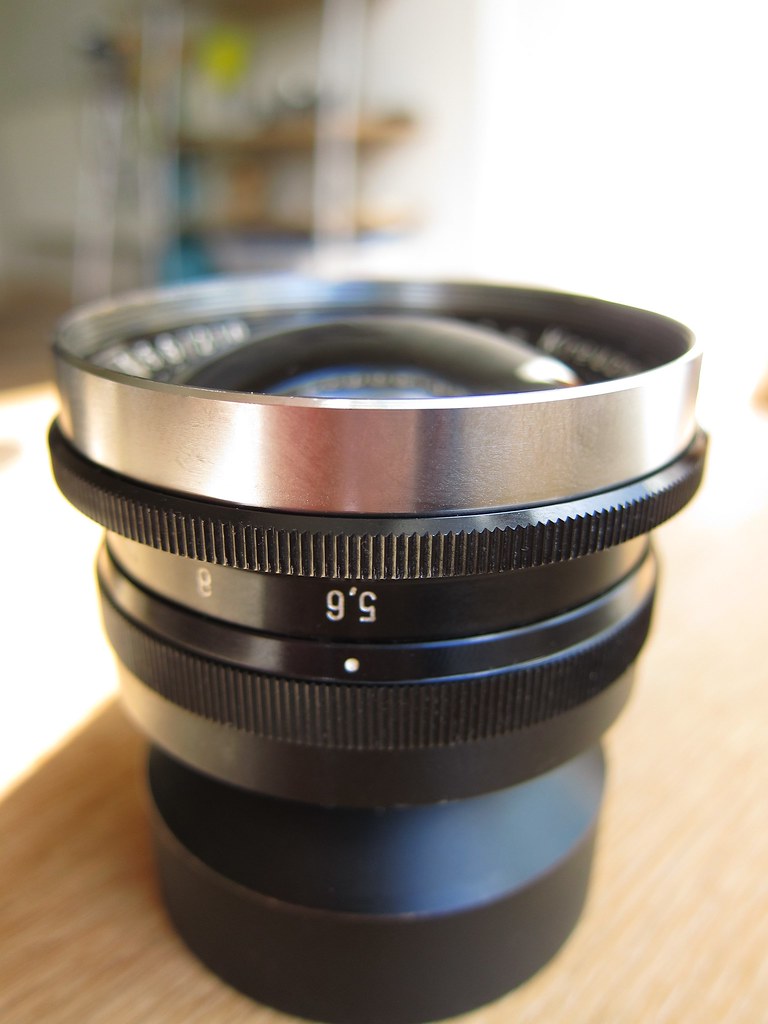
I frustratingly need just one more piece of the adapter puzzle, and I can get this crazy lump up and running.
Last edited by Sciolist on Sun Oct 27, 2019 3:55 pm; edited 1 time in total |
|
| Back to top |
|
|
tomasg
Joined: 01 Nov 2009
Posts: 1135
Expire: 2014-04-28
|
Posted: Sat Oct 26, 2019 3:49 pm Post subject: |
|
Posted: Sat Oct 26, 2019 3:49 pm Post subject: |
|
|
tomasg wrote:
This is a great site, scroll down for the Petri lenses.
http://www.mike-lee.org/scripts/camera/main.htm |
|
| Back to top |
|
|
wolfhansen
Joined: 06 Oct 2013
Posts: 514
Location: Germany, Ruhr Area
|
Posted: Sat Oct 26, 2019 3:56 pm Post subject: |
|
Posted: Sat Oct 26, 2019 3:56 pm Post subject: |
|
|
wolfhansen wrote:
Thank you very much for the Link! - Great! 
_________________
Greets
Wolfgang |
|
| Back to top |
|
|
michelb

Joined: 24 Dec 2015
Posts: 69
Location: Montréal area,Québec, Canada
|
Posted: Sat Oct 26, 2019 10:04 pm Post subject: |
|
Posted: Sat Oct 26, 2019 10:04 pm Post subject: |
|
|
michelb wrote:
Minolta AUTO TELE-ROKKOR-PG 135mm F 2.8 from the first series circa 1959

_________________
Michel B
Interested in Minolta SLR's since 1971 |
|
| Back to top |
|
|
Sciolist
Joined: 29 Mar 2017
Posts: 1445
Location: Scotland
Expire: 2021-04-16
|
Posted: Mon Oct 28, 2019 12:32 pm Post subject: |
|
Posted: Mon Oct 28, 2019 12:32 pm Post subject: |
|
|
Sciolist wrote:
1974 Schneider-Kreuznach G - Claron 9/240.
Probably the longest I've taken to clean the glass in a lens, even with such a simple and accessible design (6/4 Plasmat). A heavy and very resilient haze on two inner faces, two types of fungus for added interest, along with the usual detritus.
It's scrubbed up nice though, although I can still see, frustratingly, a faint haze and the faintest ghost of an outline of one of the fungi. Sometimes you have to decide, when facing diminishing returns, that it's time to stop.
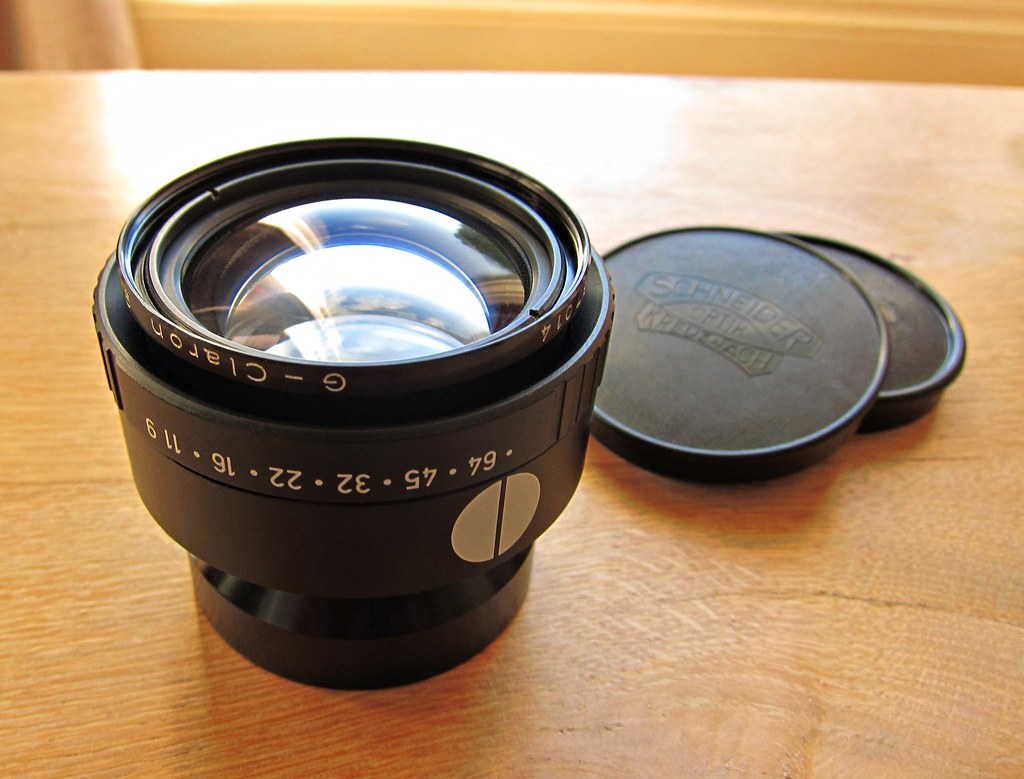
I have no idea how it performs, as I need to now work out how best to nail it to the end of my camera. I'm thinking of taking a leaf out of DConvert's book and using a 54mm helicoid, rather than tubes and reducers to a 42mm.
I have a feeling I've not revived it to top performance. It was more a rescue mission than anything else. It's very compact for a 240 I must say, and it didn't need a winch to move it around. |
|
| Back to top |
|
|
Minolfan

Joined: 30 Dec 2008
Posts: 3451
Location: Netherlands
|
Posted: Mon Oct 28, 2019 10:04 pm Post subject: |
|
Posted: Mon Oct 28, 2019 10:04 pm Post subject: |
|
|
Minolfan wrote:
[quote="michelb"]
Minolta AUTO TELE-ROKKOR-PG 135mm F 2.8 from the first series circa 1959
 |
|
| Back to top |
|
|
sergtum
Joined: 14 Nov 2016
Posts: 735
|
Posted: Wed Oct 30, 2019 8:06 am Post subject: |
|
Posted: Wed Oct 30, 2019 8:06 am Post subject: |
|
|
sergtum wrote:
 DSC00048 by Mr TTT, on Flickr |
|
| Back to top |
|
|
Oldhand

Joined: 01 Apr 2013
Posts: 6016
Location: Mid North Coast NSW - Australia
|
Posted: Wed Oct 30, 2019 9:50 am Post subject: |
|
Posted: Wed Oct 30, 2019 9:50 am Post subject: |
|
|
Oldhand wrote:
Very cool!
How does it shoot?
Tom |
|
| Back to top |
|
|
!Karen
Joined: 20 Jul 2013
Posts: 836
Location: Belgium Baby
|
Posted: Wed Oct 30, 2019 9:56 am Post subject: |
|
Posted: Wed Oct 30, 2019 9:56 am Post subject: |
|
|
!Karen wrote:

_________________
FLICKR PHOTOSTREAM |
|
| Back to top |
|
|
sergtum
Joined: 14 Nov 2016
Posts: 735
|
Posted: Wed Oct 30, 2019 3:44 pm Post subject: |
|
Posted: Wed Oct 30, 2019 3:44 pm Post subject: |
|
|
sergtum wrote:
| Oldhand wrote: |
Very cool!
How does it shoot?
Tom
|
so far, only one pic
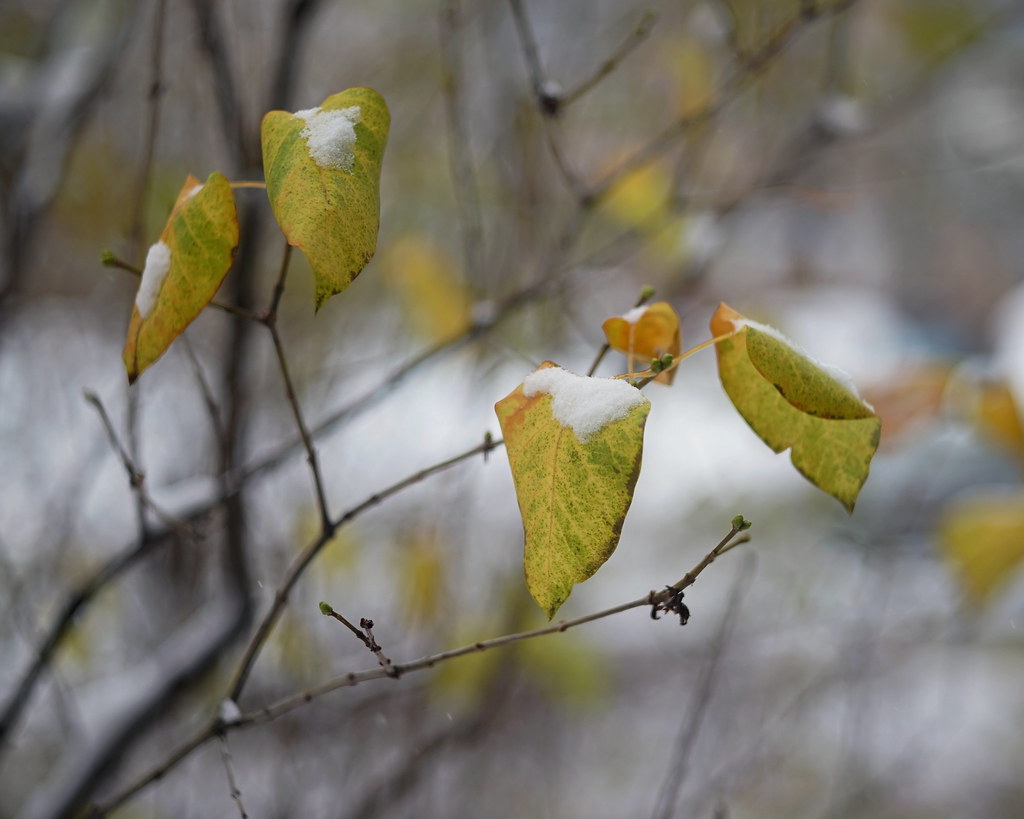 DSC00053 by Mr TTT, on Flickr |
|
| Back to top |
|
|
sergtum
Joined: 14 Nov 2016
Posts: 735
|
Posted: Wed Oct 30, 2019 3:48 pm Post subject: |
|
Posted: Wed Oct 30, 2019 3:48 pm Post subject: |
|
|
sergtum wrote:
|
|
| Back to top |
|
|
Oldhand
Joined: 01 Apr 2013
Posts: 6016
Location: Mid North Coast NSW - Australia
|
Posted: Wed Oct 30, 2019 9:12 pm Post subject: |
|
Posted: Wed Oct 30, 2019 9:12 pm Post subject: |
|
|
Oldhand wrote:
| sergtum wrote: |
| Oldhand wrote: |
Very cool!
How does it shoot?
Tom
|
so far, only one pic
DSC00053 by Mr TTT, on Flickr |
|
|
| Back to top |
|
|
walter g

Joined: 20 Feb 2010
Posts: 2463
Location: NC, USA
|
Posted: Thu Oct 31, 2019 5:00 am Post subject: |
|
Posted: Thu Oct 31, 2019 5:00 am Post subject: |
|
|
walter g wrote:
For October. I got a Minolta Auto Rokkor PF 55mm f1.8 from Japan. Nice lens with original caps.
I also got A Vivitar SMS 28mm f2.8 MC Close Focus lens by Komine, in excellent shape.
_________________
Main cameras
Panasonic G5,Nikon J1,Pentax Q10,Sony Nex 6
Minolta MC W SI 2.5/28, MD 2.8/28, MC W SG 3.5/28, MC Celtic 3.5/28, MC W HG 2.8/35, MD Celtic 2.8/35, QE 4/35, Rokkor X 2/45, MC Rokkor X PG 1.4/50, MC Rokkor X PG 1.7/50, MD Rokkor X 1.7/50, MD 2/50, MC Rokkor PF 1.7/55, MC Rokkor PF 1.9/55, Auto Tele Rokkor PG 2.8/135, MC Tele Rokkor QD 3.5/135, TC 4/135, MC Celtic 4/200, MC Tele Rokkor PE 4.5/200
MD 28-70 f3.5-4.8, MD Macro 35-70 f3.5, Md 70-210 f4, MD Rokkor X 75-200 f4.5, MD 100-200 f5.6
Nikon Nikkor 4/20, O Auto 2/35, S Auto 1.4/50..... Miranda Auto 2.8/28, Auto 2.8/35, Auto 1.4/50, Auto EC 1.4/50, Auto 1.8/50, Auto EC 1.8/50,Auto 1.9/50, Auto 3.5/135
Various Soligor,Sun,Fujita,Komura,Spitatone, etc. Lenses
|
|
| Back to top |
|
|
calvin83

Joined: 12 Apr 2009
Posts: 7740
Location: Hong Kong
|
Posted: Thu Oct 31, 2019 6:12 am Post subject: |
|
Posted: Thu Oct 31, 2019 6:12 am Post subject: |
|
|
calvin83 wrote:
| !Karen wrote: |
|

_________________
The best lens is the one you have with you.
https://lensfever.com/
https://www.instagram.com/_lens_fever/ |
|
| Back to top |
|
|
kds315*

Joined: 12 Mar 2008
Posts: 16912
Location: Kehl, Germany
Expire: 2021-03-09
|
Posted: Thu Oct 31, 2019 7:34 am Post subject: |
|
Posted: Thu Oct 31, 2019 7:34 am Post subject: |
|
|
kds315* wrote:
| calvin83 wrote: |
| !Karen wrote: |
|
|
Karen, to the double-ring-bokeh monster 
_________________
Klaus - Admin
"S'il vient a point, me souviendra" [Thomas Bohier (1460-1523)]
http://www.macrolenses.de for macro and special lens info
http://www.pbase.com/kds315/uv_photos for UV Images and lens/filter info
https://www.flickr.com/photos/kds315/albums my albums using various lenses
http://photographyoftheinvisibleworld.blogspot.com/ my UV BLOG
http://www.travelmeetsfood.com/blog Food + Travel BLOG
https://galeriafotografia.com Architecture + Drone photography
Currently most FAV lens(es):
X80QF f3.2/80mm
Hypergon f11/26mm
ELCAN UV f5.6/52mm
Zeiss UV-Planar f4/60mm
Zeiss UV-Planar f2/62mm
Lomo Уфар-12 f2.5/41mm
Lomo Зуфар-2 f4.0/350mm
Lomo ZIKAR-1A f1.2/100mm
Nikon UV Nikkor f4.5/105mm
Zeiss UV-Sonnar f4.3/105mm
CERCO UV-VIS-NIR f1.8/45mm
CERCO UV-VIS-NIR f4.1/94mm
CERCO UV-VIS-NIR f2.8/100mm
Steinheil Quarzobjektiv f1.8/50mm
Pentax Quartz Takumar f3.5/85mm
Carl Zeiss Jena UV-Objektiv f4/60mm
NYE OPTICAL Lyman-Alpha II f1.1/90mm
NYE OPTICAL Lyman-Alpha I f2.8/200mm
COASTAL OPTICS f4/60mm UV-VIS-IR Apo
COASTAL OPTICS f4.5/105mm UV-Micro-Apo
Pentax Ultra-Achromatic Takumar f4.5/85mm
Pentax Ultra-Achromatic Takumar f5.6/300mm
Rodenstock UV-Rodagon f5.6/60mm + 105mm + 150mm
|
|
| Back to top |
|
|
paulhofseth
Joined: 05 Mar 2011
Posts: 620
Location: Norway
Expire: 2018-06-28
|
Posted: Thu Oct 31, 2019 8:06 am Post subject: bispheric to achieve aspheric advantage |
|
Posted: Thu Oct 31, 2019 8:06 am Post subject: bispheric to achieve aspheric advantage |
|
|
paulhofseth wrote:
unlike some producers who claim to be the first to introduce aspheric lenses, Heinz Kilfitt introduced an element ground with two radii. I have not been able to ascertain whether all his 90mms had that- even after mr Backs Zoomar took over.
p. |
|
| Back to top |
|
|
kds315*
Joined: 12 Mar 2008
Posts: 16912
Location: Kehl, Germany
Expire: 2021-03-09
|
Posted: Thu Oct 31, 2019 9:06 am Post subject: Re: bispheric to achieve aspheric advantage |
|
Posted: Thu Oct 31, 2019 9:06 am Post subject: Re: bispheric to achieve aspheric advantage |
|
|
kds315* wrote:
| paulhofseth wrote: |
unlike some producers who claim to be the first to introduce aspheric lenses, Heinz Kilfitt introduced an element ground with two radii. I have not been able to ascertain whether all his 90mms had that- even after mr Backs Zoomar took over.
p. |
Heard and read about that, too Paul, but also was never able to find some proof for such ....
I read it here (in German): https://photobutmore.de/exakta/kilfitt/
(quote) 1959 entwickelte er ein verbessertes Makro-Kilar 90 mit einer asphärischen Linse. (unquote)
The same text later mentions a "BI-spährische Linse" i.e. a lens with two radii
_________________
Klaus - Admin
"S'il vient a point, me souviendra" [Thomas Bohier (1460-1523)]
http://www.macrolenses.de for macro and special lens info
http://www.pbase.com/kds315/uv_photos for UV Images and lens/filter info
https://www.flickr.com/photos/kds315/albums my albums using various lenses
http://photographyoftheinvisibleworld.blogspot.com/ my UV BLOG
http://www.travelmeetsfood.com/blog Food + Travel BLOG
https://galeriafotografia.com Architecture + Drone photography
Currently most FAV lens(es):
X80QF f3.2/80mm
Hypergon f11/26mm
ELCAN UV f5.6/52mm
Zeiss UV-Planar f4/60mm
Zeiss UV-Planar f2/62mm
Lomo Уфар-12 f2.5/41mm
Lomo Зуфар-2 f4.0/350mm
Lomo ZIKAR-1A f1.2/100mm
Nikon UV Nikkor f4.5/105mm
Zeiss UV-Sonnar f4.3/105mm
CERCO UV-VIS-NIR f1.8/45mm
CERCO UV-VIS-NIR f4.1/94mm
CERCO UV-VIS-NIR f2.8/100mm
Steinheil Quarzobjektiv f1.8/50mm
Pentax Quartz Takumar f3.5/85mm
Carl Zeiss Jena UV-Objektiv f4/60mm
NYE OPTICAL Lyman-Alpha II f1.1/90mm
NYE OPTICAL Lyman-Alpha I f2.8/200mm
COASTAL OPTICS f4/60mm UV-VIS-IR Apo
COASTAL OPTICS f4.5/105mm UV-Micro-Apo
Pentax Ultra-Achromatic Takumar f4.5/85mm
Pentax Ultra-Achromatic Takumar f5.6/300mm
Rodenstock UV-Rodagon f5.6/60mm + 105mm + 150mm
|
|
| Back to top |
|
|
|
|
 Español
 中文
 Magyar
 Русский
 Deutsch
 日本語
 Français



